


Choose your metal: 14K or 18K, yellow, white or rose.
The metal frames your diamond and sets the mood of your ring. Here is how the six Raul golds compare in color, feel and care.
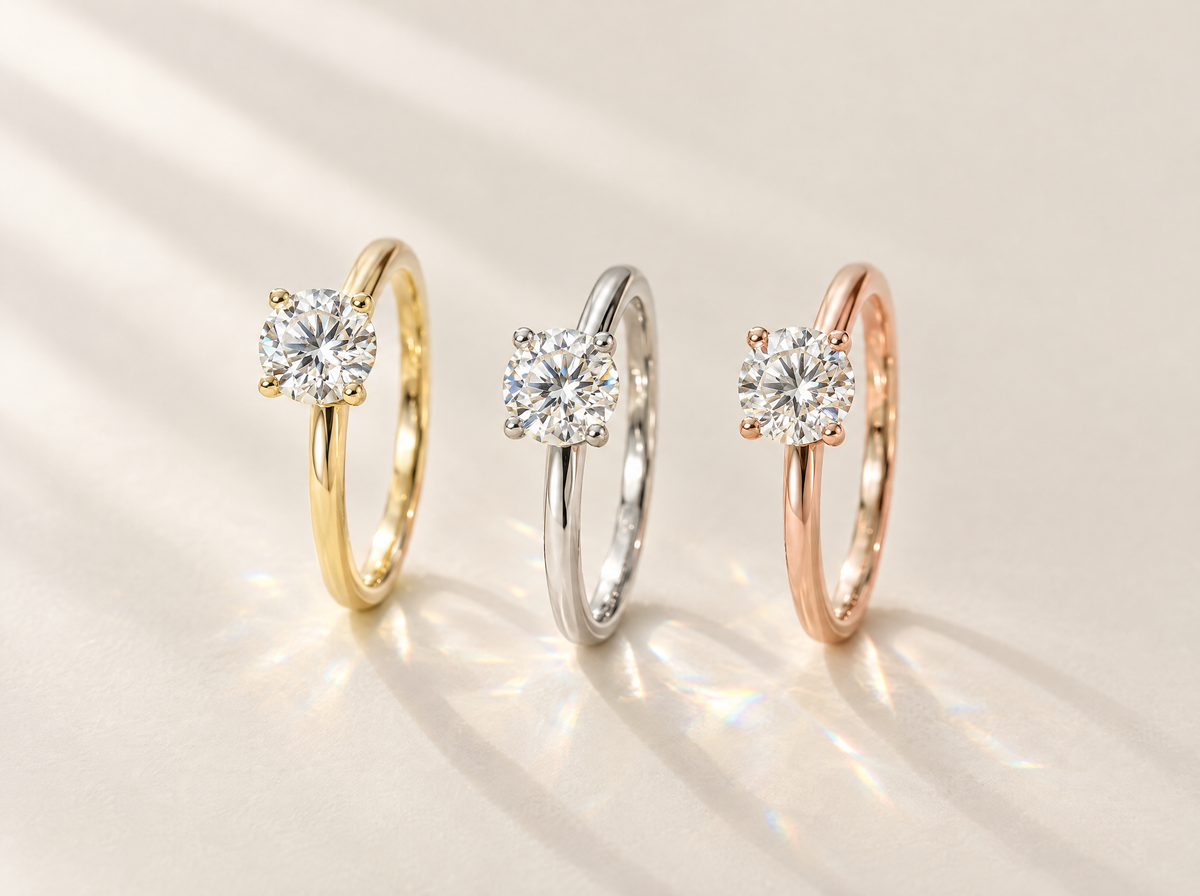
14K or 18K?
Pure 24K gold is too soft for a ring, so it is blended with other metals for strength and color. Karat tells you how much pure gold the alloy holds.
14K gold · 58.3% gold
Harder and more resistant to scratches. A practical, beautiful choice for a ring you wear every day.
18K gold · 75% gold
A richer, deeper color and a weightier feel. Slightly softer, so it shows wear a little sooner.
All six metals, side by side.
| Metal | Gold content | Color | Care | Good to know |
|---|---|---|---|---|
| 14K Yellow Gold | 58.3% | Warm, classic yellow | Polish with a soft cloth | Hard-wearing for every day |
| 14K White Gold | 58.3% | Bright, cool white | Rhodium re-plating over time | Keeps the focus on the diamond |
| 14K Rose Gold | 58.3% | Soft blush pink | Polish with a soft cloth | Warm and romantic |
| 18K Yellow Gold | 75% | Rich, deep yellow | Polish with a soft cloth | The most golden color we offer |
| 18K White Gold | 75% | Luminous white | Rhodium re-plating over time | A softer, refined white |
| 18K Rose Gold | 75% | Subtle, warm blush | Polish with a soft cloth | A gentler rose tone |
Every Raul setting is crafted in 14K or 18K gold, in yellow, white or rose.
Yellow, white or rose.
Yellow gold
Warm and timeless. Gold blended with silver and copper keeps its natural color with no plating.
Shop yellow goldWhite gold
Bright and modern. Gold blended with white metals, then plated in rhodium for a crisp white finish.
Shop white goldRose gold
Soft and romantic. A higher share of copper gives it a warm blush that never needs plating.
Shop rose goldKeep it bright for decades.
Clean gently
Soak in warm water with a drop of mild soap, brush softly, rinse and pat dry.
Take it off
Remove your ring for the gym, cleaning, swimming and gardening.
Refresh white gold
Re-plate white gold when the finish softens, and have prongs checked once a year.
About metals.
Is 18K gold better than 14K?
Not better, different. 18K has more pure gold, so its color is richer. 14K is harder and more resistant to everyday scratches. Both are excellent choices for an engagement ring.
Does white gold turn yellow?
White gold gets its bright white finish from rhodium plating. Over time, the plating wears and a soft warm tone can show through. A quick re-plating restores the finish, often every year or two depending on wear.
Is rose gold right for sensitive skin?
Rose gold contains copper, which a small number of people react to. If you have a metal sensitivity, talk to our team before you order and we’ll help you choose.
Which metal suits a colorless diamond?
All of them. A D–F diamond looks crisp and icy in white gold and creates a bright contrast in yellow or rose gold. Choose the color you love wearing.
Do you offer platinum?
We craft every setting in 14K or 18K gold, in yellow, white or rose.
Can my wedding band be a different metal?
Yes, though matching metals wear evenly side by side. Mixing colors is a beautiful, modern choice if you love the look.


Ready to choose?
Shop engagement rings by metal, or compare colors with our team in a free consultation.