


The Raul Journal· Diamond Education
How to buy a lab grown diamond: a first-timer's guide
The short answer: How to buy a lab grown diamond comes down to six steps: set a budget, choose a shape, understand the 4Cs, check the grading report, choose the setting, metal and size, and read the policies before you pay. Get those right and your first diamond becomes a confident choice, not a guess.
Buying a first diamond can feel like learning a new language. It does not need to. This guide shows you how to buy a lab grown diamond step by step, in the order we recommend, with the exact standards we hold our own diamonds to.
- Set your budget.
- Choose the shape.
- Understand the 4Cs.
- Check the grading report.
- Choose the setting, metal and size.
- Check the policies before you pay.
How to buy a lab grown diamond: start with a budget
Set a number you are comfortable with before you browse. It keeps the search focused and the decision calm.
Lab grown diamonds are real diamonds, grown in a lab rather than mined. They typically cost 50–70% less than mined diamonds of the same grade, so your budget goes further. In our current collection, engagement rings start at $750 and the median starting price is $1,640, at the time of writing (October 2026). 150 of our engagement rings start under $1,500, and 380 start under $3,000.
Two practical notes. First, leave room for a wedding band if you plan to buy one. Second, if you prefer to spread the cost, Shop Pay Installments is available at checkout, subject to eligibility. Browse by price: under $1,500, under $3,000 and $5,000 and above.
Choose the shape that suits you
Shape is the most personal choice, and the one people notice first. Brilliant cuts, like round, oval and pear, sparkle in many small flashes. Step cuts, like emerald and Asscher, show broad flashes of light and reveal clarity openly, which makes a high clarity grade more important.
For elongated shapes, the length-to-width ratio shapes the outline. These are popular ranges, not rules:
| Shape | Popular ratio | Good to know |
|---|---|---|
| Oval | 1.30–1.50 | Elongates the finger; check for a bow-tie effect |
| Pear | 1.45–1.75 | A V-prong protects the point; bow-tie can appear |
| Marquise | 1.85–2.10 | V-prongs protect both points |
| Emerald | 1.30–1.50 | Step cut with broad flashes; shows clarity openly |
| Cushion | 1.00–1.05 square, 1.15–1.25 elongated | Soft corners, romantic look |
| Radiant | 1.00–1.05 square, 1.20–1.35 elongated | Brilliant sparkle in a rectangular outline |
| Princess and Asscher | 1.00–1.05 | Square; corners are protected by V-prongs |
The bow-tie effect is a darker band across the center of some oval, pear and marquise diamonds. Look closely at the stone before you choose, or ask us to walk you through it. Our diamond shapes guide covers each shape in depth.
Understand the 4Cs, and our quality floor
The 4Cs describe every diamond: cut, color, clarity and carat. Most buying advice is about where to compromise. With us, you start from a fixed floor instead.
| The C | What it describes | Every Raul center diamond |
|---|---|---|
| Cut | How well the diamond is proportioned and finished, which drives its brightness and sparkle | Excellent or Ideal |
| Color | How colorless the diamond is, on a scale from D to Z | D–F, the colorless range |
| Clarity | Tiny internal features and surface marks, seen under magnification | VVS1–VVS2 |
| Carat | The diamond's weight, which sets its size | Your choice |
Because cut, color and clarity are already set high, your real decision is carat. For a sense of scale, a round 1 ct diamond measures about 6.4 mm across, 1.5 ct about 7.4 mm, and 2 ct about 8.1 mm. Read our 4Cs guide or The Raul Standard for more detail.
Check the grading report: IGI and GIA
A grading report is an independent lab's description of the diamond. It is your proof that the stone is what the seller says it is. Never buy a center diamond without one.
Every Raul center diamond ships with an independent IGI report. IGI gives full 4Cs grades for lab grown diamonds, so you can see the exact cut, color and clarity in writing. Check that the shape, carat weight and grades on the report match the product you are buying, and keep the report safe. You need the original report for a return.
You may also see GIA reports for lab grown diamonds. Since 2025, GIA describes lab grown diamonds as "premium" or "standard" instead of giving D–Z color and FL–I clarity grades. That is useful, but less specific than a full grade. Learn more in IGI vs GIA and reading your IGI certificate.
Choose the setting, metal and ring size
Setting. A solitaire puts all the focus on the diamond. A halo or hidden halo adds sparkle around or beneath it. A three-stone ring is often said to symbolize past, present and future. A bezel wraps the diamond in metal, a good fit for an active life. Our ring styles guide compares them.
Metal. We craft every ring in 14K or 18K gold, in yellow, white or rose. 14K is 58.3% gold and harder for daily wear. 18K is 75% gold with a richer color. White gold is rhodium plated, and re-plating restores its bright finish over time, often every year or two depending on wear. Rose gold gets its warm color from copper. See our metal guide.
Size. We make rings in US sizes 3 to 12, including half sizes. For bands wider than 6 mm, go up half a size. Our ring size guide shows you how to find the right size.
Check the policies before you pay
Good policies protect you if something is not right. Before you buy from anyone, look for clear answers on each of these. Here is how ours work:
- Returns: 30 days from delivery, unworn, in original packaging, with the original report. We send a prepaid label and refund within 5–7 business days of receiving the ring. Custom and engraved pieces are final sale unless defective. See returns.
- Resizing: one free resize within 60 days of delivery, with shipping both ways, usually 7–14 business days. Most rings resize 1–2 sizes; eternity bands are limited. See resizing.
- Warranty: a lifetime warranty on manufacturing defects. It does not cover wear, accidents, loss or theft. See warranty.
- Timing: each ring is made to order in 2–3 weeks, then delivered in 2–5 business days with free insured shipping and signature required, US only. Peak seasons add 2–3 business days. For a proposal date, order at least 4 weeks ahead. See shipping.
- Price match: we match identical certified diamonds from authorized retailers.
Our picks for a first lab grown diamond
- 1 Carat Emerald Cut Solitaire Ring: a step cut that shows off VVS clarity. From $750 at the time of writing.
- Pear Bezel Engagement Ring: the bezel wraps and protects the point, ideal for busy hands. From $930 at the time of writing.
- Oval Hidden Halo Engagement Ring, 2.14 CTW: a flattering elongated shape with sparkle beneath. From $1,392 at the time of writing.
- Round Brilliant Three Stone Trilogy Ring: classic brilliance and a meaningful design. From $1,419 at the time of writing.
Questions
Are lab grown diamonds real diamonds?
Yes. Lab grown diamonds are real diamonds, grown in a lab rather than mined. They are graded the same way, and every Raul center diamond comes with an independent IGI report.
Should I choose an IGI or GIA report for a lab grown diamond?
IGI gives full 4Cs grades for lab grown diamonds. Since 2025, GIA describes lab grown diamonds as "premium" or "standard" instead of exact color and clarity grades. Every Raul center diamond ships with an IGI report.
What color and clarity should I choose?
With us, you do not need to compromise. Every center diamond is E–F color and VVS1–VVS2 clarity, with an Excellent or Ideal cut. Focus on shape, carat and setting.
How far ahead should I order before a proposal?
At least 4 weeks. Each ring is crafted in 2–3 weeks, and delivery takes 2–5 business days after dispatch. Peak seasons add 2–3 business days.
What if the ring does not fit?
You get one free resize within 60 days of delivery, with shipping both ways. It usually takes 7–14 business days. Most rings resize 1–2 sizes; eternity bands are limited.
Buying your first diamond is easier with someone in your corner. Book a free 30-minute consultation by video or phone, Monday to Saturday, and we will help you through each step.
More from the Journal.
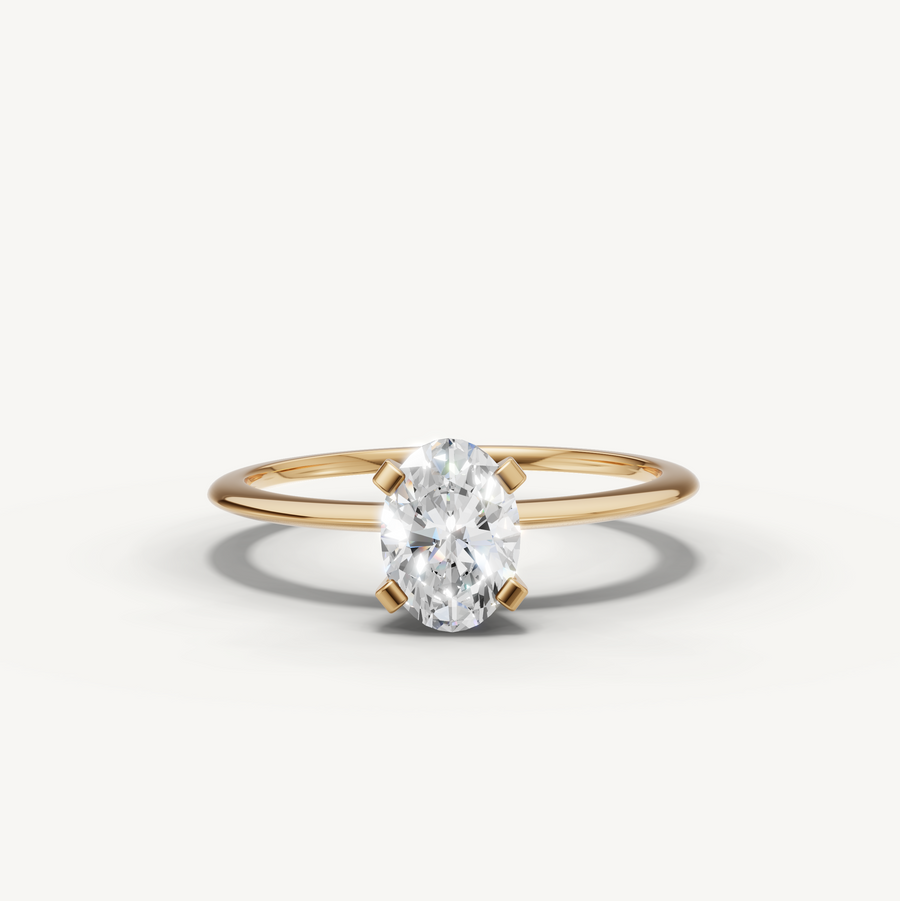
Are lab-grown diamonds real? What they are, and how to tell
A lab-grown diamond has the same carbon crystal, hardness and sparkle as a mined diamond; only its origin differs. Here is how it compares to mined diamonds and simulants, how labs identify...
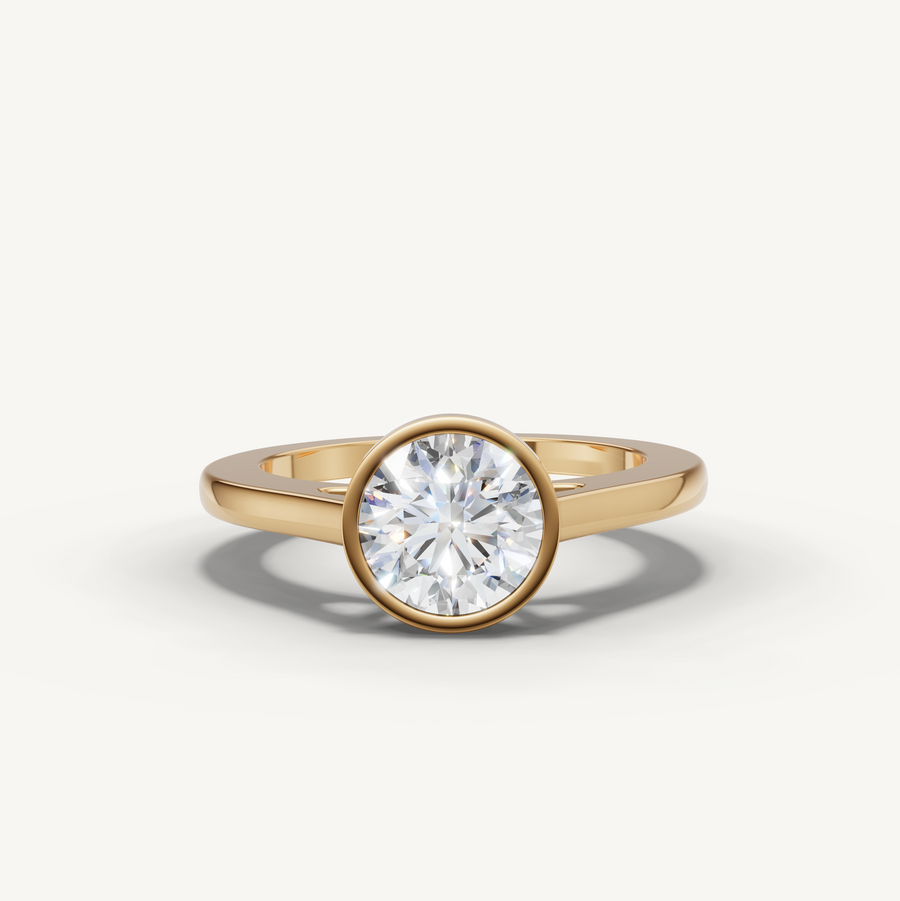
Bezel engagement rings: the modern setting, explained
A guide to bezel engagement rings: how the setting works, full versus half bezel, how it compares with prongs, which shapes suit it, and how it stacks with a wedding band.
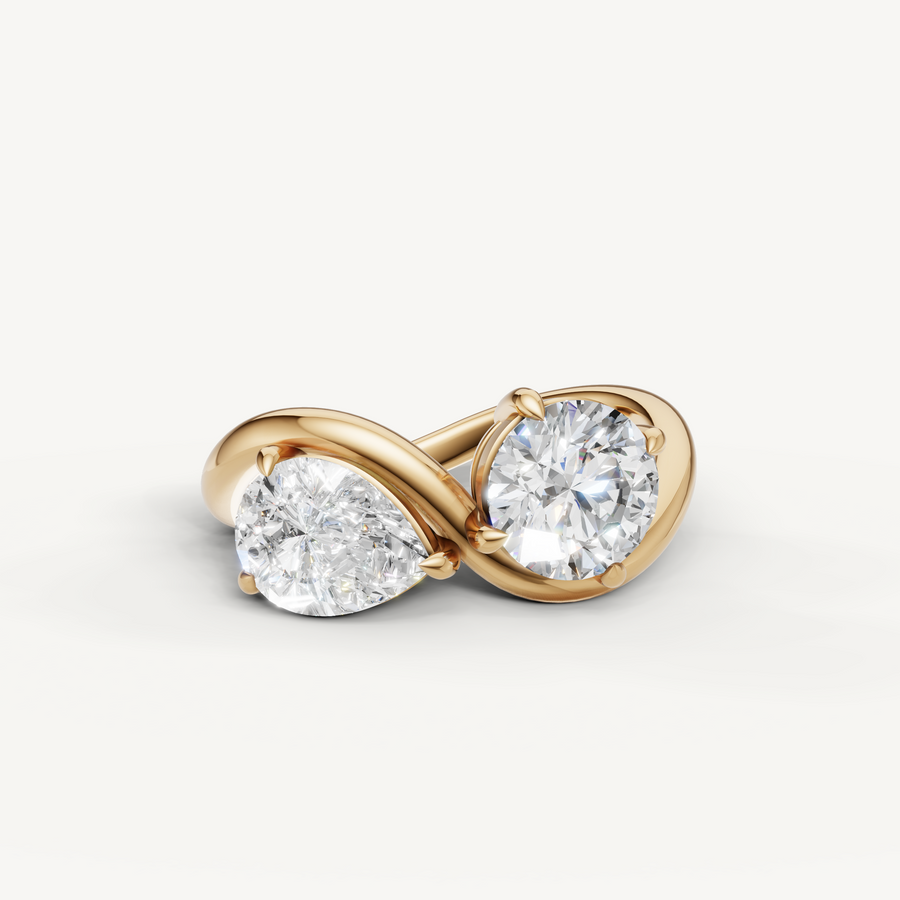
Toi et moi engagement rings: how to choose two stones that belong together
A guide to toi et moi engagement rings: the meaning, how to pair shapes and sizes, how carat weight is listed, and how a two stone ring wears with a wedding band.
Talk it through with our team.
A free 30-minute video or phone consultation, at your pace.