


The Raul Journal· Wedding Bands
How to choose a wedding ring for you both
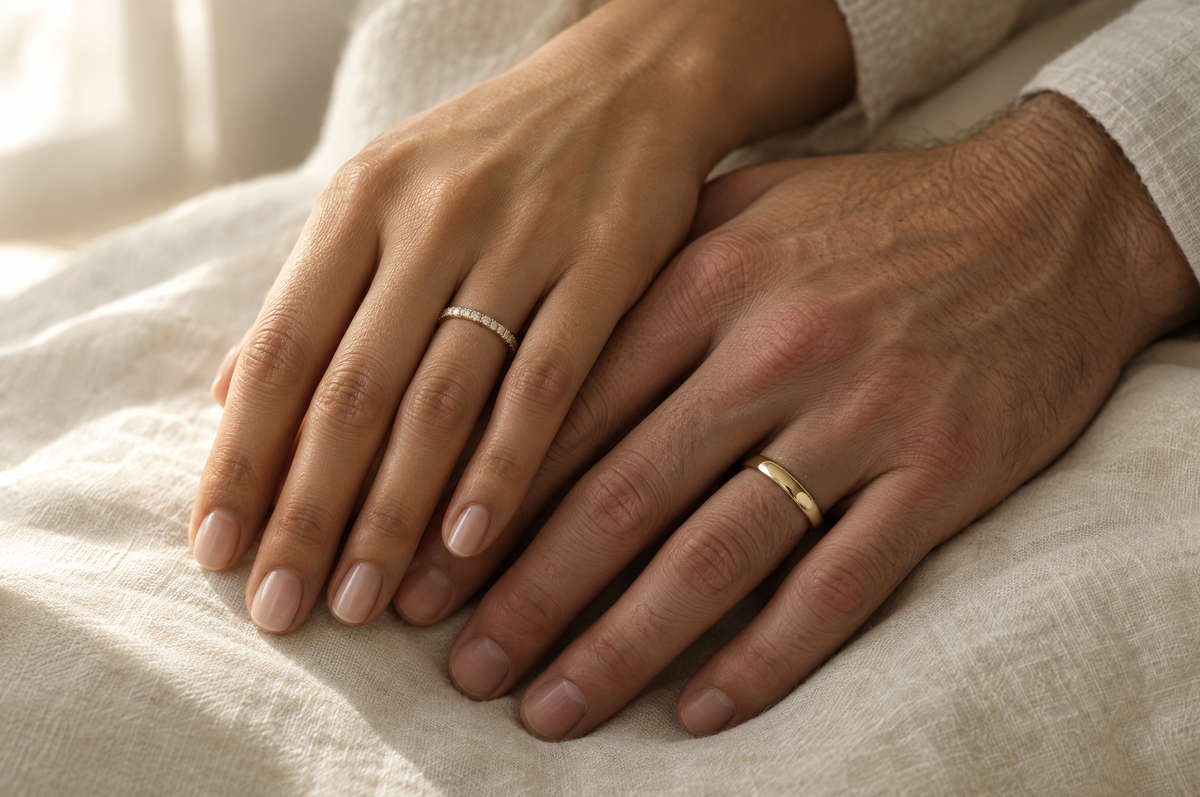
The short answer: Knowing how to choose a wedding ring starts with how each of you lives and works. Pick a width and gold you will both wear comfortably every day, and agree on matching or complementary rings. Then lock in sizing, engraving and timing early, so both rings arrive with room to spare before the wedding.
Learning how to choose a wedding ring is easier when you treat it as a decision for two. Unlike an engagement ring, which one person often chooses as a surprise, wedding rings are usually chosen together, worn by both of you, and worn every day. This guide covers lifestyle, width, metal, matching versus complementary rings, engraving, timing and sizing.
How to choose a wedding ring together
A simple order keeps the conversation focused:
- Lifestyle. What do your hands do all day?
- Width and fit. What feels natural on each of your fingers?
- Metal. Which gold color and karat suit you both?
- Style. Matching, complementary, or entirely your own?
- Details. Engraving, sizing and timing.
Each of you can answer the first two separately. The last three are where you choose together.
Start with lifestyle
A wedding ring is not an occasion piece. It goes to work, to the gym, into the kitchen and onto the steering wheel. The best ring is the one you forget you are wearing until you look down and smile.
- Hands-on work or sport. Choose low, smooth designs: plain gold, or diamonds held in a channel or bezel setting that keeps them below the surface.
- Office and everyday wear. You have more freedom. Shared prong and pavé bands add sparkle, with a little more care needed over time.
- Wearing with an engagement ring. The band needs to sit well beside it. That is a separate decision with its own guide; start with our curved and contour bands if a straight band leaves a gap.
It is common for partners to answer this differently. One of you may want a bold diamond band, the other a slim plain one. That is fine; the next sections show how to make two different rings feel like a pair.
Width and comfort
Width shapes both the look and the feel. A slim band is understated and light. A wide band has presence and feels more substantial. If neither of you wears rings now, a slim or medium band is the gentlest start.
Two practical points:
- Wide bands fit tighter. For bands wider than 6 mm, go up half a size.
- The inside matters. A comfort fit band is rounded inside and slides over the knuckle more easily than a flat-inside band. In our current collection, the Classic Domed Wedding Band in 14K Gold Comfort Fit names comfort fit in its title.
Choosing the metal
Our wedding rings are made in 14K or 18K gold, each in yellow, white or rose. Choosing the same gold for both rings is the strongest link between them.
| 14K gold | 18K gold | |
|---|---|---|
| Gold content | 58.3% gold | 75% gold |
| Durability | Harder, better for active hands | Softer, shows wear sooner |
| Color | Lighter, subtle tone | Richer, deeper tone in yellow and rose |
| Price | Lower | Higher, because it contains more gold |
Yellow gold is warm and timeless. White gold is rhodium plated for its bright finish; re-plating restores it over time, often every year or two depending on wear. Rose gold takes its color from copper and has a soft, warm glow. If one of you prefers yellow and the other white, consider rose as a meeting point, or simply wear different colors on purpose. See our metal guide for more.
Matching or complementary wedding rings
There are three ways couples usually approach this.
- Matching. The same design in two widths. Plain gold bands do this beautifully.
- Complementary. Different rings that share one detail: the same gold, the same setting style, or the same finish. A channel-set diamond band for each of you is a good example, one bolder and one finer.
- Independent. Each of you chooses freely, and the shared gold color ties the pair together.
Complementary rings are often the sweet spot. You each get a ring that suits your hand, and they still read as a pair when your hands are together. Explore women's wedding bands and men's diamond wedding bands side by side.
Engraving, timing and sizing
Engraving
We offer free engraving on most rings, up to 20 characters. Initials, a date, coordinates or a few words that mean something only to the two of you all fit. Engraved pieces are final sale unless defective, so double-check spelling and size before you confirm.
Timing
Every ring is made to order and crafted in 2 to 3 weeks. Delivery takes 2 to 5 business days after dispatch, with free insured shipping, signature required, within the US. Peak seasons add 2 to 3 business days. Leave extra room for a resize, which usually takes 7 to 14 business days. In short: order well before the wedding, not in its final weeks.
Sizing
Measure each finger at the end of the day, when fingers are slightly larger, and never when your hands are cold. We craft rings in US sizes 3 to 12, including half sizes. Use our ring size guide to measure at home. If a ring does not fit, you have one free resize within 60 days of delivery, with shipping both ways covered. Most rings resize 1 to 2 sizes, while eternity bands are more limited. See our resizing page.
Our picks
Prices are from our current collection at the time of writing (October 2026).
- Classic Domed Wedding Band in 14K Gold Comfort Fit: a timeless plain band that works for either partner, from $1,801.
- Geometric Plain Gold Wedding Band in 14K Yellow Gold: plain gold with a faceted, modern edge, from $459.
- Round Brilliant Channel-Set Lab Grown Diamond Wedding Band: diamonds held low and secure, from $1,069.
- Men's Lab Grown Diamond Channel Wedding Ring in 14K Gold: a channel-set partner to the band above, from $1,719.
- Men's Triple Row Channel Set Lab Grown Diamond Ring: three rows of diamonds for a bolder band, from $1,616.
Questions
Should our wedding rings match?
They do not have to. Many couples choose rings that share the same gold color and one design detail, so each ring suits its wearer and the two still read as a pair.
How far ahead should we order wedding rings?
Rings are crafted in 2 to 3 weeks, plus 2 to 5 business days for delivery. Add time for a possible resize, which usually takes 7 to 14 business days, and for peak seasons.
Is 14K or 18K gold better for a wedding ring?
14K is harder and better for active hands. 18K has a richer color and contains more gold, so it costs more. Many couples pick the same karat so their rings age the same way.
Can we engrave our rings for free?
Yes, most rings include free engraving up to 20 characters. Engraved pieces are final sale unless defective.
What if one of our rings does not fit?
You get one free resize within 60 days of delivery, with shipping both ways. Unworn, unengraved pieces can also be returned within 30 days of delivery in their original packaging.
Choosing two rings at once is easier with a little guidance. Book a free 30-minute consultation by video or phone, together or separately, and we will help you find rings that suit you both.
More from the Journal.
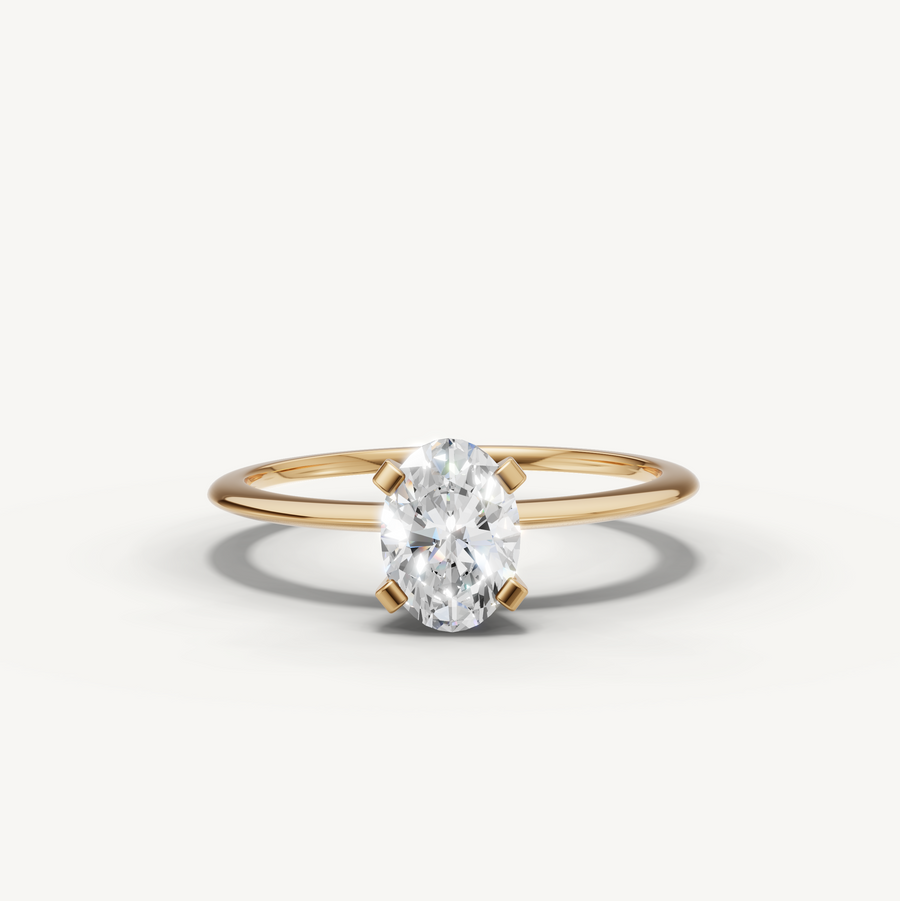
Are lab-grown diamonds real? What they are, and how to tell
A lab-grown diamond has the same carbon crystal, hardness and sparkle as a mined diamond; only its origin differs. Here is how it compares to mined diamonds and simulants, how labs identify...
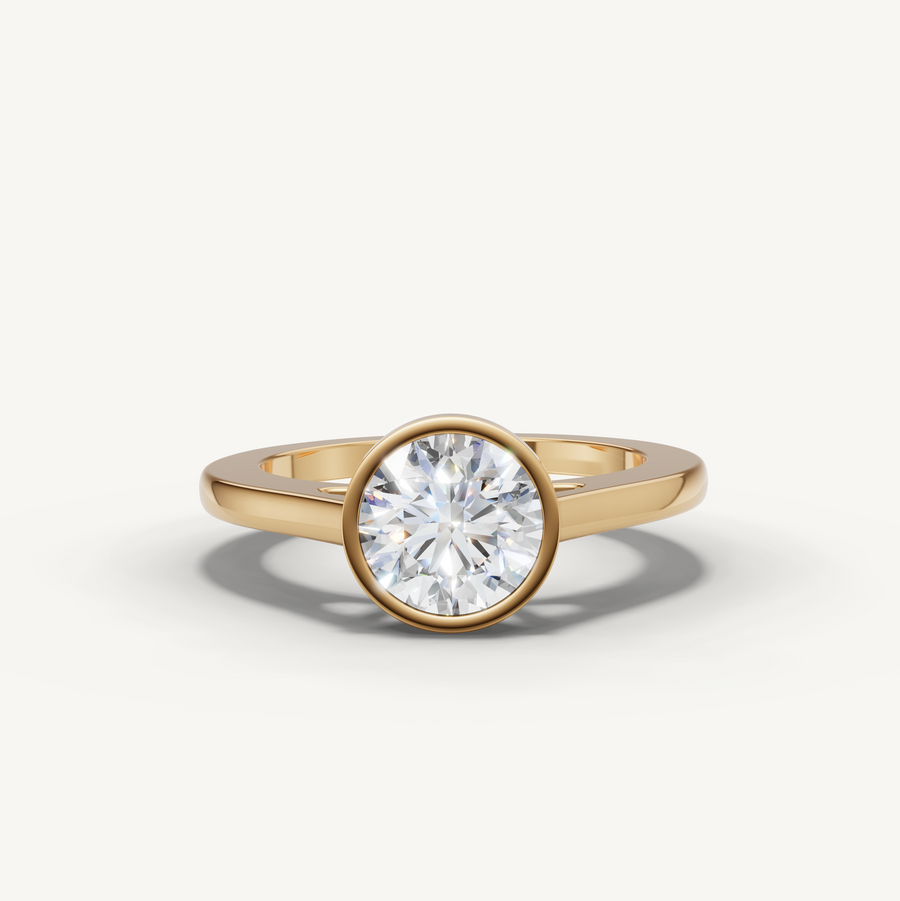
Bezel engagement rings: the modern setting, explained
A guide to bezel engagement rings: how the setting works, full versus half bezel, how it compares with prongs, which shapes suit it, and how it stacks with a wedding band.
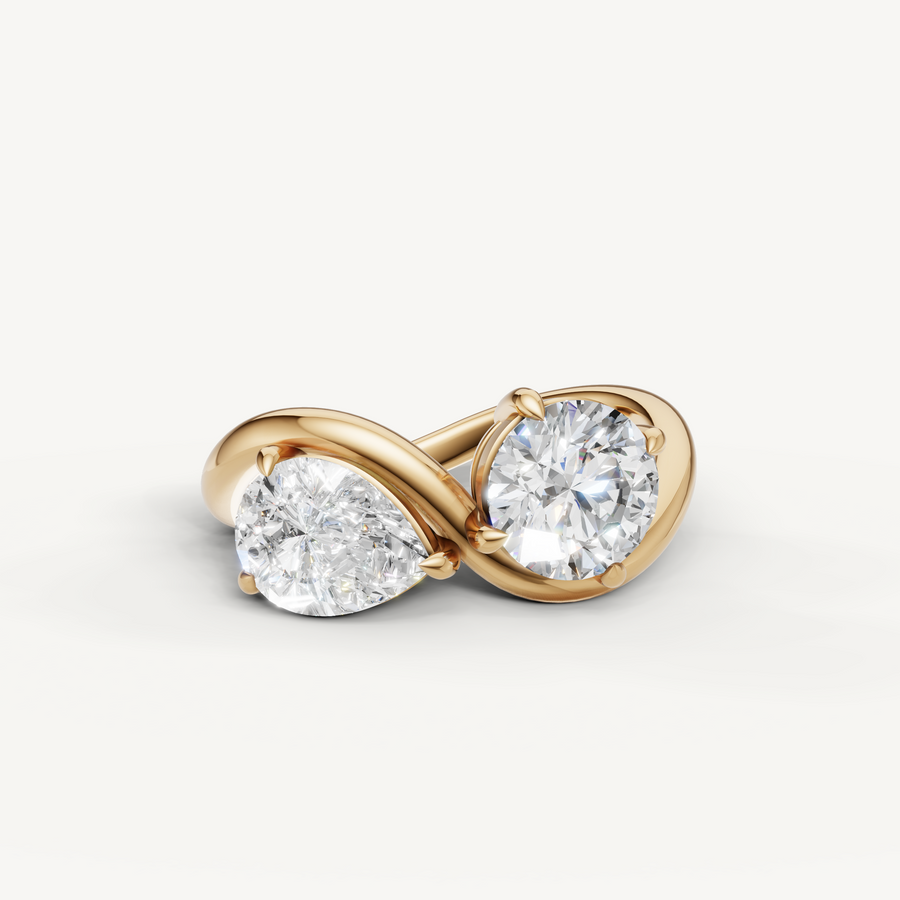
Toi et moi engagement rings: how to choose two stones that belong together
A guide to toi et moi engagement rings: the meaning, how to pair shapes and sizes, how carat weight is listed, and how a two stone ring wears with a wedding band.
Talk it through with our team.
A free 30-minute video or phone consultation, at your pace.