


The Raul Journal· Engagement Rings
Asscher cut engagement rings: a complete guide
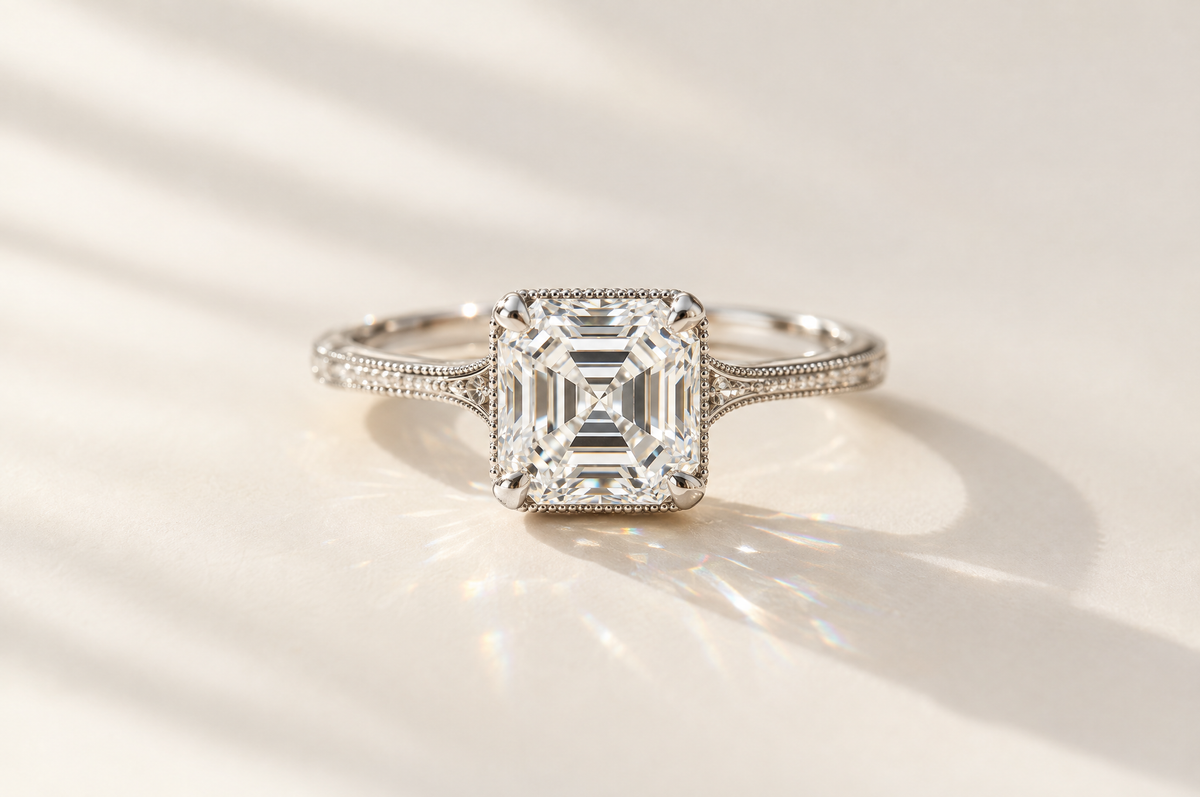
The short answer: Asscher cut engagement rings feature a square step-cut diamond with cropped corners and a hypnotic "windmill" pattern that seems to draw the eye into the stone. Because step cuts reveal clarity openly, the Asscher rewards a very clean diamond. Pair it with a solitaire, hidden halo or vintage setting, and look for a ratio close to 1.00–1.05 for a true square.
A cut with Art Deco roots
The Asscher takes its name from the Dutch family of diamond cutters who introduced it in the early 1900s. It became closely associated with the Art Deco era, when geometric lines and bold symmetry defined jewelry design.
That heritage is still part of its appeal. An Asscher feels architectural and a little glamorous, in a way no brilliant cut quite matches. It suits someone who loves vintage design but wants a stone with crisp, clean structure. Our diamond shapes guide shows how it compares with every other shape.
How a step cut works
Most diamonds you know are brilliant cuts. They are faceted to break light into many small flashes. An Asscher is a step cut: rows of long, flat facets descend toward the center like stairs.
Step cuts show broad flashes of light rather than busy sparkle. Look straight down into a well-cut Asscher and you see a pattern of concentric squares, often described as a windmill or a hall of mirrors. It is calm, deep and unmistakable.
The Asscher's cropped corners give it an almost octagonal outline. Those corners also mean there are no sharp points to protect, which makes it a practical shape for daily wear.
Why clarity matters more in an Asscher
Step cuts reveal clarity openly. The long, open facets that create the windmill pattern also act like windows. An inclusion that a brilliant cut might disguise can sit in plain view in an Asscher.
This is why clarity is worth prioritizing when you compare Asscher cut engagement rings. Every Raul center diamond is VVS1–VVS2 clarity, E–F color and Excellent or Ideal cut, with an independent IGI grading report included. That VVS floor means the clear, glassy look an Asscher is known for is built in rather than left to chance. Read more in our 4Cs guide.
Asscher vs emerald cut
The Asscher and the emerald cut are close relatives. Both are step cuts with cropped corners. The difference is proportion, and it changes the whole mood of the ring.
| Asscher | Emerald | |
|---|---|---|
| Outline | Square with cropped corners | Rectangle with cropped corners |
| Popular ratio | 1.00–1.05 | 1.30–1.50 |
| Signature look | Windmill pattern drawing the eye inward | Long "hall of mirrors" flashes along its length |
| On the finger | Compact, bold, symmetrical | Elongating, sleek |
| Clarity | Revealed openly; prioritize it | Revealed openly; prioritize it |
If you want length, choose an emerald. If you want perfect symmetry and that inward-pulling pattern, choose an Asscher. Compare both in our emerald and Asscher collections.
The best settings for Asscher cut engagement rings
Solitaire
Four prongs on a slim band let the step-cut pattern take center stage. Nothing distracts from the geometry. Browse solitaire engagement rings.
Hidden halo
A ring of small diamonds below the center adds sparkle from the side while the top view stays a clean square. It is a quiet way to add brilliance to a calm stone. See hidden halo engagement rings.
Vintage and milgrain
Milgrain edges and filigree honor the Asscher's Art Deco roots. These designs feel collected rather than bought. Explore vintage engagement rings.
Three-stone
Trillion or pear side stones add brilliant-cut sparkle beside the step-cut center, a lovely contrast. Three-stone rings are often said to symbolize past, present and future. Visit three-stone engagement rings.
What Asscher cut engagement rings cost with us
In our current collection at the time of writing (October 2026), Asscher cut engagement rings start from $750 for a 1 carat Asscher solitaire in 14K gold. Hidden halo, three-stone and vintage designs start higher because they carry more diamonds and more metalwork.
For context, across our full engagement ring collection (all shapes), the median 14K variant price at the time of writing is $1,253 with a 1.0 ct center, $1,556 with 2.0 ct and $1,896 with 3.0 ct. 18K versions cost more because 18K is 75% gold, compared with 58.3% in 14K. Lab-grown diamonds typically cost 50–70% less than mined diamonds of the same grade, which leaves room to prioritize the clarity an Asscher deserves.
Every ring is made to order and crafted in 2–3 weeks, then ships free and insured within the US with a signature required. If you have a proposal date in mind, order at least 4 weeks ahead.
Our picks
- 1 Carat Asscher Cut Lab Grown Diamond Solitaire Ring in 14K Gold: the windmill pattern at its purest; from $750 at the time of writing.
- Asscher Cut Lab Grown Diamond Hidden Halo Engagement Ring in 14K Gold: a clean square with hidden side sparkle; from $1,392 at the time of writing.
- Vintage Milgrain Asscher Cut Lab-Grown Diamond Engagement Ring in 14K Gold: Art Deco detail for an Art Deco cut; from $1,639 at the time of writing.
- Asscher Cut Lab Grown Diamond Engagement Ring with Trillion Side Stones in 14K Gold: step-cut calm framed by brilliant sparkle; from $1,444 at the time of writing.
- Vintage Asscher-Cut Lab-Grown Diamond Bridal Set in 14K Gold: engagement ring and band designed together; from $2,472 at the time of writing.
See every design in our Asscher diamond engagement rings collection.
Questions
Is an Asscher cut the same as a square emerald cut?
They are close relatives. Both are step cuts with cropped corners, but the Asscher is square, with a popular ratio of about 1.00–1.05, and is cut to show its distinctive windmill pattern. An emerald is rectangular, typically about 1.30–1.50.
Does an Asscher cut sparkle?
It shines differently from a round. Instead of many small flashes, it shows broad, deep flashes and a mesmerizing pattern of squares. If you want more sparkle around it, a hidden halo or trillion side stones add brilliance.
What clarity should I choose for an Asscher?
Prioritize clarity, because step cuts reveal it openly. Every Raul center diamond is VVS1–VVS2, so this is already taken care of, and the grade is confirmed on the IGI report.
Which metal suits an Asscher cut?
White gold brings out its icy, Art Deco character, while yellow and rose gold give it warmth. We craft in 14K or 18K, in yellow, white or rose. Our metal guide explains the differences.
Can I engrave an Asscher ring?
Yes. Free engraving is available on most rings, up to 20 characters. Engraved pieces are final sale unless defective, so check the spelling twice.
An Asscher is a considered choice, and it is worth talking through. Book a free 30-minute consultation by video or phone, and we will help you find the Asscher, setting and metal that suit you.
More from the Journal.
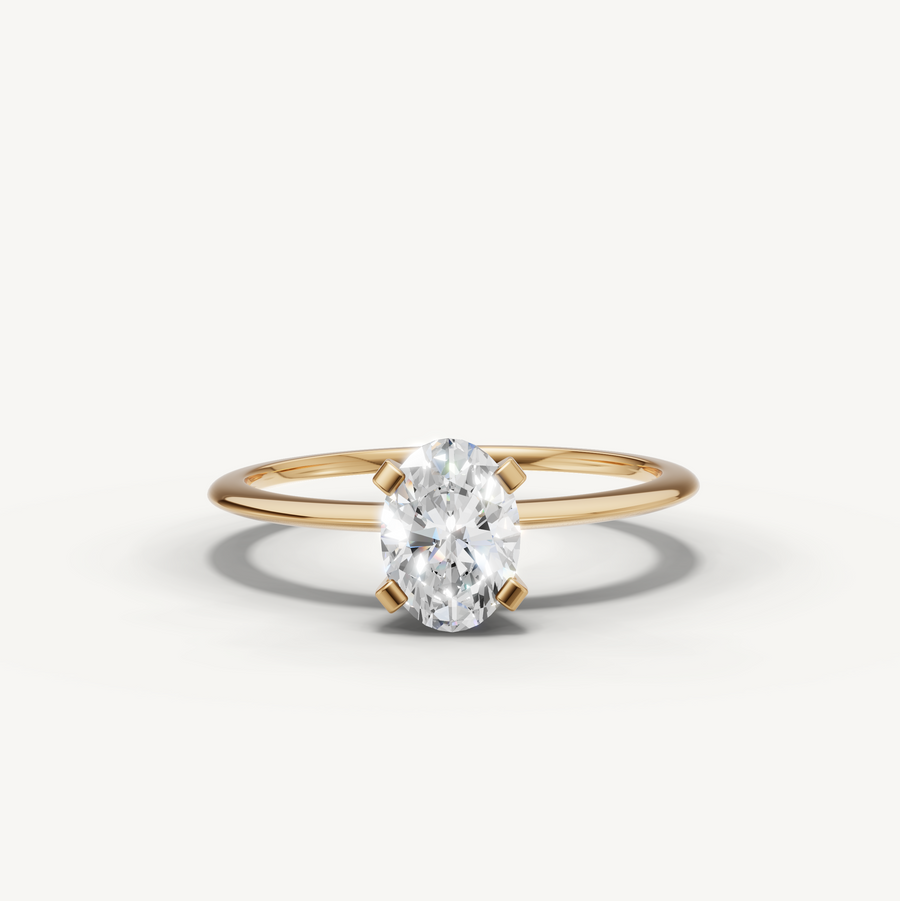
Are lab-grown diamonds real? What they are, and how to tell
A lab-grown diamond has the same carbon crystal, hardness and sparkle as a mined diamond; only its origin differs. Here is how it compares to mined diamonds and simulants, how labs identify...
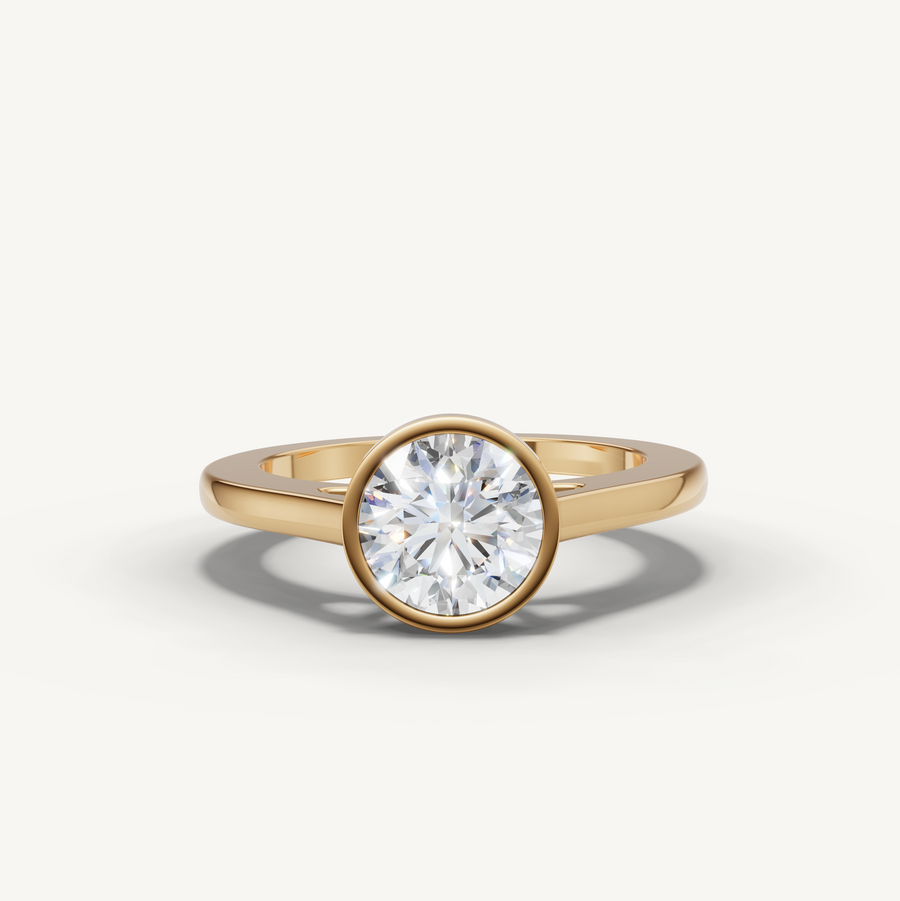
Bezel engagement rings: the modern setting, explained
A guide to bezel engagement rings: how the setting works, full versus half bezel, how it compares with prongs, which shapes suit it, and how it stacks with a wedding band.
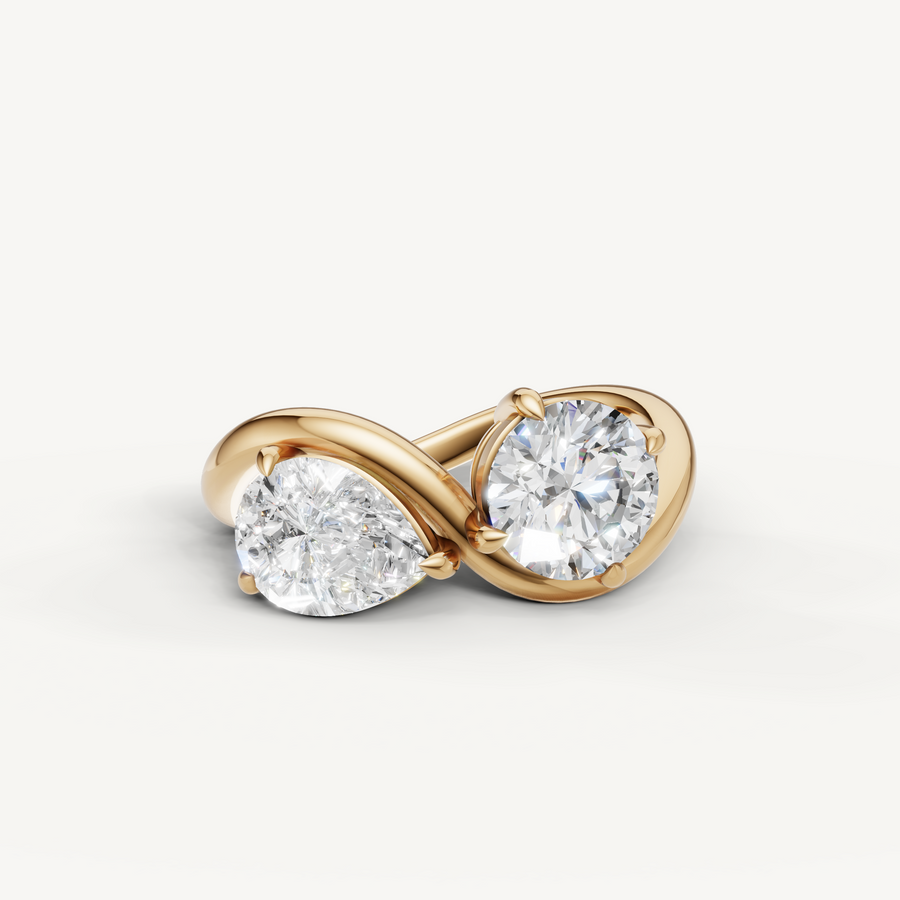
Toi et moi engagement rings: how to choose two stones that belong together
A guide to toi et moi engagement rings: the meaning, how to pair shapes and sizes, how carat weight is listed, and how a two stone ring wears with a wedding band.
Talk it through with our team.
A free 30-minute video or phone consultation, at your pace.