


The Raul Journal· Fine Jewelry
Best Lab-Grown Diamond Tennis Bracelets to Stack in 2026
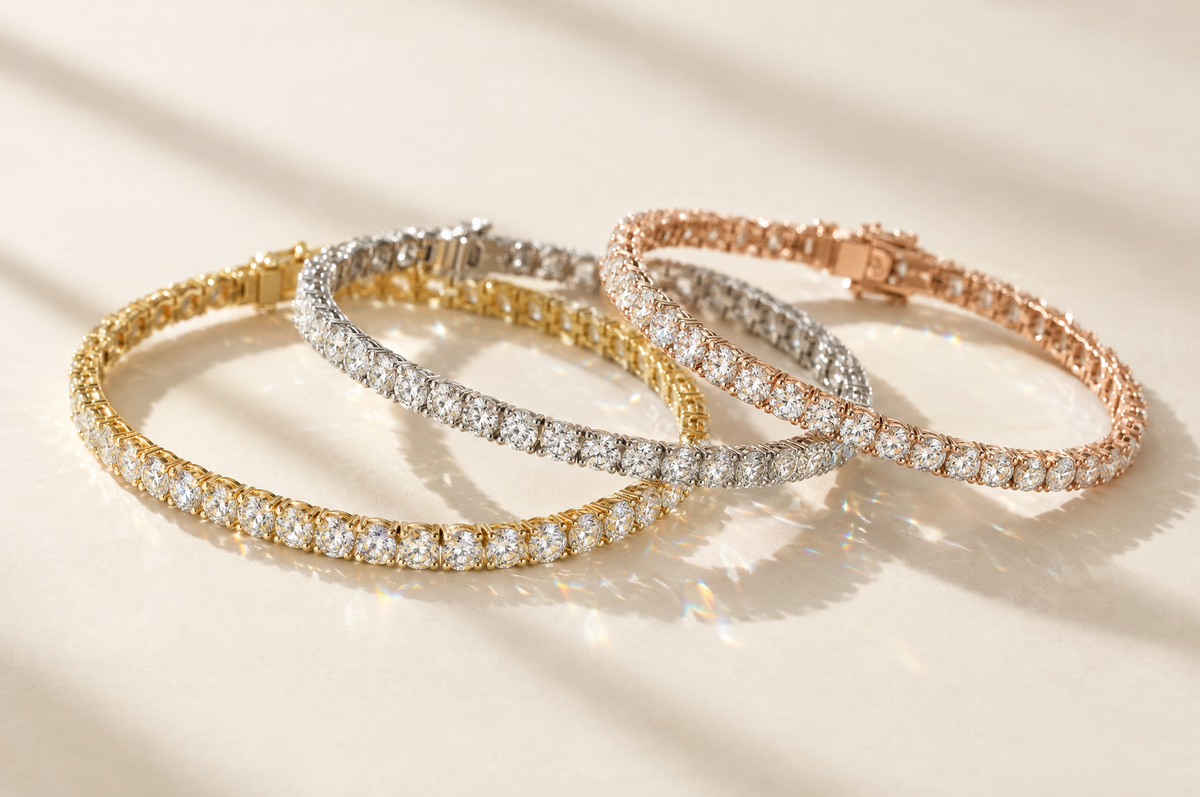
The short answer: The best lab-grown diamond tennis bracelet for stacking is a bezel-set style. A thin metal rim guards every stone, so it sits flat beside a watch or a second bracelet without snagging. Choose a classic round line for the most sparkle, an oval, emerald or pear line to echo a fancy-shape engagement ring, and save wide double-row styles for days you wear one bracelet alone.
A lab-grown diamond tennis bracelet lives on the wrist, often every day, and the setting you choose decides how well it handles that life in a stack. This guide compares six styles, what each costs in our collection, and what to check before you buy one for yourself or as a gift.
Why this matters
A tennis bracelet is not a special-occasion piece kept in a safe. Daily contact with desks, sleeves and other bracelets is what separates a good stacking piece from one that snags or loosens. The setting style shapes durability more than carat weight does: a bezel surrounds each stone with metal, while prongs hold it at a few points.
When you stack several diamond pieces, it helps to know exactly what you are buying. The small stones in a tennis bracelet rarely come with individual grading reports, so ask for the clarity standard in writing. Ours are hand-selected lab-grown diamonds of VVS1–VVS2 clarity. You can see every style in our diamond tennis bracelets collection, each one made to order rather than pulled from stock.
What makes the best lab-grown diamond tennis bracelet?
- Setting security: bezel and channel settings protect stones from catching on clothing; prong settings show more light but deserve more regular checks.
- Documentation: tennis bracelet stones are small and rarely carry individual reports, so ask for the stated clarity and gold karat in writing.
- Metal: solid 14K gold (58.3% gold) holds up to daily wear; confirm the karat before you buy.
- Clasp: a secure clasp with a safety catch matters most on a piece you wear every day.
- Stack compatibility: a bracelet's width and profile decide whether it sits flat beside other pieces or fights for space.
- Price transparency: prices should be listed clearly, not hidden behind a request for a quote.
Lab-grown diamond tennis bracelets at a glance
| Style | Best for | Standout feature | Key limitation |
|---|---|---|---|
| Bezel-set | Everyday stacking | A metal rim guards each stone | Slightly less light than open prongs |
| Classic round | A first tennis bracelet | Maximum sparkle, minimal metal | Prongs can catch on knit sleeves |
| Double-row | Solo statement wear | More diamonds per inch | Often too wide to stack comfortably |
| Graduated | Pairing with delicate chains | Larger stones at the center, tapering toward the clasp | Less uniform sparkle all the way around |
| Fancy-shape | Echoing a fancy-shape ring | Oval, emerald or pear stones match your ring | Shape choice ties it to one look |
| Two-tone | Mixed-metal stackers | Works with yellow and white gold together | Narrower selection |
1. Bezel-set tennis bracelet: best lab-grown diamond tennis bracelet for everyday stacking
A bezel-set bracelet surrounds each stone with a thin metal rim instead of open prongs, which gives the edge of every stone more protection from everyday knocks. Our Lab-Grown Diamond Square Bezel Tennis Bracelet in 14K Gold sets square lab-grown diamonds in bezels, made to order.
Pros:
- Metal around each stone protects against chips and snags
- Reads more modern than a classic prong line
- Sits close to the wrist, so it layers easily
Cons:
- Slightly less light reaches each stone than in an open prong setting
- Made to order, so allow 2–3 weeks for crafting plus delivery
- Square stones read more geometric than round brilliants
Pricing: from $2,320 at the time of writing (October 2026).
Best for: one tennis bracelet to wear every day without fuss. Verdict: Buy.
2. Classic round tennis bracelet: best for a first tennis bracelet
A continuous line of round brilliants held with minimal metal is the style most people picture first. Open settings let light reach each stone from more angles, so the line looks bright. Our Round Lab Grown Diamond Tennis Bracelet in 14K Gold (2.20 ct. tw.) is a classic starting point.
Pros:
- Maximum light and sparkle
- A classic look that suits any stack
- Easy to compare across carat weights
Cons:
- Prongs catch on sweaters and gloves more than bezels do
- Deserves regular prong and clasp checks
Pricing: from $1,580 at the time of writing (October 2026).
Best for: a first tennis bracelet where classic styling matters most. Verdict: Buy, and have the prongs and clasp checked at least once a year.
3. Double-row tennis bracelet: best for solo statement wear
Two rows of diamonds double the sparkle per inch without needing larger stones. It reads as a finished piece on its own, which is exactly why it is harder to stack. Our Crisscross Double Row Lab-Grown Diamond Tennis Bracelet in 14K Gold shows the look.
Pros:
- More sparkle without oversized stones
- Works beautifully as a single piece
Cons:
- Width often crowds out a second bracelet
- More diamonds and metal mean a higher price
Pricing: from $3,880 at the time of writing (October 2026).
Best for: one bracelet that does all the work. Verdict: Hold if you are building a stack; Buy if you want a single statement piece.
4. Graduated tennis bracelet: best for pairing with delicate chains
A graduated bracelet places larger stones at the center and smaller ones toward the clasp, a look borrowed from vintage riviera designs. We do not currently offer a graduated tennis bracelet, but it is a style worth knowing if you are shopping for a stack.
Pros:
- A clear focal point at the center
- Slimmer toward the clasp, so it tucks beside a watch or chain
Cons:
- Less uniform sparkle around the whole wrist
- Harder to match if you want an identical second piece later
Best for: layering with a plain gold chain. Verdict: Buy for a mixed stack; skip if you want even sparkle all the way around. For a custom version, explore custom jewelry design.
5. Fancy-shape tennis bracelet: best for echoing a fancy-shape engagement ring
Oval, emerald or pear stones replace the round brilliants most tennis bracelets use, which matters if your engagement ring is already a fancy shape. Choose the Classic Oval Lab Diamond Tennis Bracelet in 14K Gold (12 ct. tw.), the Emerald Cut Lab Grown Diamond Tennis Bracelet in 14K Gold (17.60 ct. tw.) or the Pear Lab Grown Diamond Tennis Bracelet in 14K Gold (15 ct. tw.).
Pros:
- Echoes an oval, pear or emerald engagement ring
- Elongated shapes can look generous on the wrist
- Stands out from a classic round line
Cons:
- Step-cut emeralds reveal clarity openly, so stone quality matters more
- Ties the bracelet to one shape story
Pricing: from $4,890 (oval), $7,500 (emerald) and $6,600 (pear) at the time of writing (October 2026).
Best for: anyone whose ring or jewelry already leans toward a fancy shape. Verdict: Buy if it matches your ring; wait if you are still choosing a ring shape.
6. Two-tone bracelet: best for mixed-metal stackers
Yellow and white gold together solve the problem of a wrist that already mixes both metals. Our Modern Geometric Link Lab-Grown Diamond Bracelet in Two-Tone 14K Gold is a link bracelet rather than a classic tennis line, and it bridges both metals in a stack.
Pros:
- Works with yellow and white gold pieces without clashing
- Reads less matched than a single-tone stack
Cons:
- Narrower selection than single-tone styles
- Harder to match exactly if you add another piece later
Pricing: from $3,770 at the time of writing (October 2026).
Best for: anyone who already mixes yellow and white gold. Verdict: Buy if your stack is already mixed; skip if you are building a single-tone stack.
How we ranked these lab-grown diamond tennis bracelet styles
We judged every style against the same six criteria: setting security, documentation, metal, clasp, stack compatibility and price transparency. Bezel-set and classic round styles rank higher for stacking because they sit flat beside a second or third piece. Double-row styles rank lower for stacking because their width works against them, not because the craftsmanship is any less.
A bezel does not outshine a prong setting. It is simply built for a busier life.
Build the full stack
Pair a tennis bracelet with a plain gold chain or a small charm piece, and it stays the focal point instead of competing with a second diamond line.
- Paperclip Link Chain Bracelet in 14K Yellow Gold: clean gold links beside the sparkle; from $490 at the time of writing.
- Triple Heart Charm Bracelet in 14K Yellow Gold: a softer, playful note; from $965 at the time of writing.
Is a lab-grown diamond tennis bracelet a good gift?
Yes. A tennis bracelet is one of the easiest fine jewelry gifts to get right, because it needs no ring size and suits almost any style she already wears. If you can borrow a bracelet she already owns, measure it end to end and choose the closest length.
Every Raul Diamonds bracelet is made to order in 2–3 weeks, then ships free and fully insured within the USA. For the holidays, order by Monday, November 30 for delivery by Christmas Eve. Returns are accepted within 30 days of delivery on unworn pieces that have not been engraved or resized, with a prepaid insured return label. For more ideas beyond bracelets, see our lab-grown diamond gift guide for her.
Which lab-grown diamond tennis bracelet should you choose?
Start with the bezel-set style if you stack every day and would rather not think about prongs. Our square bezel tennis bracelet makes that trade-off for you: metal around every stone, solid 14K gold, made to order.
If sparkle matters more than snag resistance, the classic round line is the timeless pick, as long as you have the prongs checked regularly. Otherwise, match the style to what you already wear: fancy shapes beside a fancy-shape ring, two-tone beside mixed metals, a slimmer line beside a plain chain.
Questions
What is the best lab-grown diamond tennis bracelet for everyday wear?
A bezel-set style, because the metal rim protects each stone from chips and snags. Prong-set styles show more sparkle but deserve more regular checks.
Is a lab-grown diamond as durable as a mined one?
Yes. Lab-grown diamonds have the same physical properties, including hardness, as mined diamonds. Durability differences between bracelets come from the setting, clasp and metal, not the diamond's origin.
Can I wear a tennis bracelet every day?
Yes, especially in a bezel or channel setting. Prong-set bracelets can be worn daily too, with a clasp and prong check at least once a year.
What is the difference between bezel-set and prong-set?
A bezel wraps each stone in a metal rim for protection. Prongs hold each stone with small metal claws that let in more light. Bezel favors durability; prongs favor sparkle.
Does a lab-grown diamond tennis bracelet hold its value?
Resale value for lab-grown diamonds is limited, so buy a bracelet you will love wearing rather than as an investment. The 14K gold itself keeps its intrinsic material value.
How much does a lab-grown diamond tennis bracelet cost with Raul Diamonds?
At the time of writing (October 2026), our round tennis bracelets start from $1,580 and our square bezel tennis bracelet from $2,320. The price rises with total carat weight, stone shape and setting style.
If you would like help building a stack around your ring, book a free consultation by video or phone. We will help you choose the bracelet, metal and length that suit your wrist.
More from the Journal.
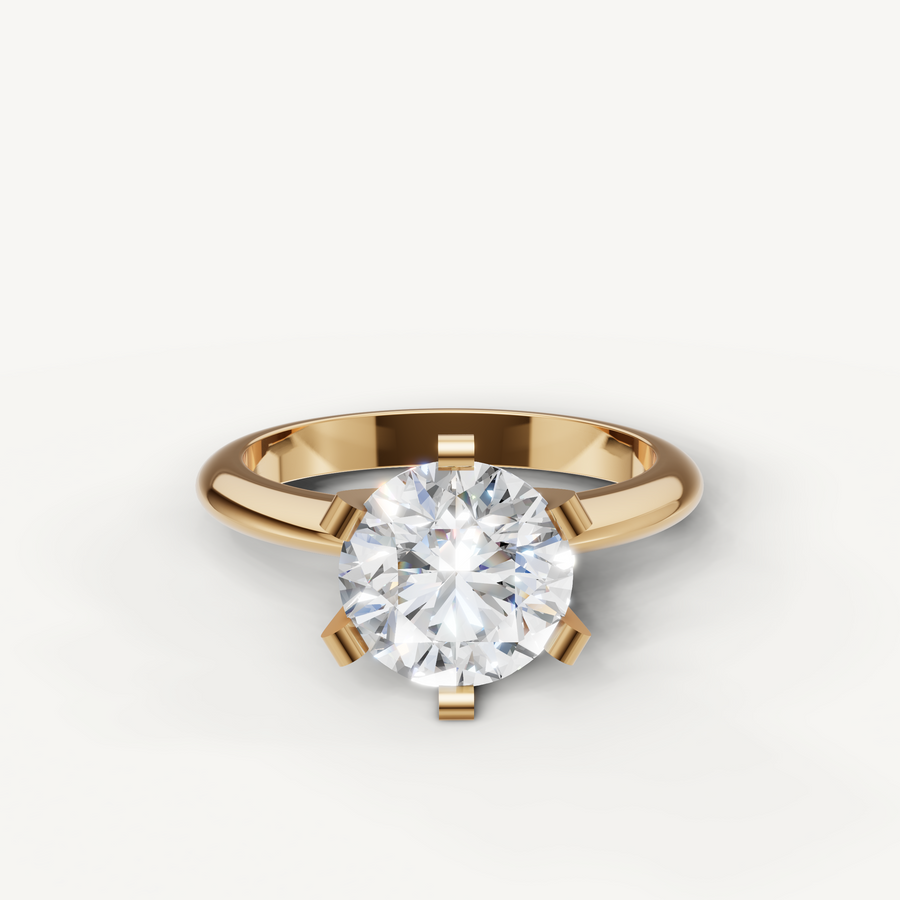
Solitaire engagement rings: choosing the shape, prongs and band
A practical guide to the solitaire engagement ring: how shape, prongs, setting height, band width, carat size and metal color change the way one center diamond looks on the hand.
Do lab-grown diamonds pass a diamond tester?
Lab-grown diamonds pass standard diamond testers because they are diamond. This guide explains how testers work, why moissanite and some HPHT stones can confuse them, and how to confirm a lab-grown diamond...
Engagement ring insurance: how it works and what to ask
A neutral, US-focused guide to engagement ring insurance: how homeowners sublimits, scheduled riders and standalone jewelry policies differ, what key terms mean, which documents to keep and which questions to ask.
Talk it through with our team.
A free 30-minute video or phone consultation, at your pace.