

The Raul Journal· Engagement Rings
Solitaire engagement rings: choosing the shape, prongs and band
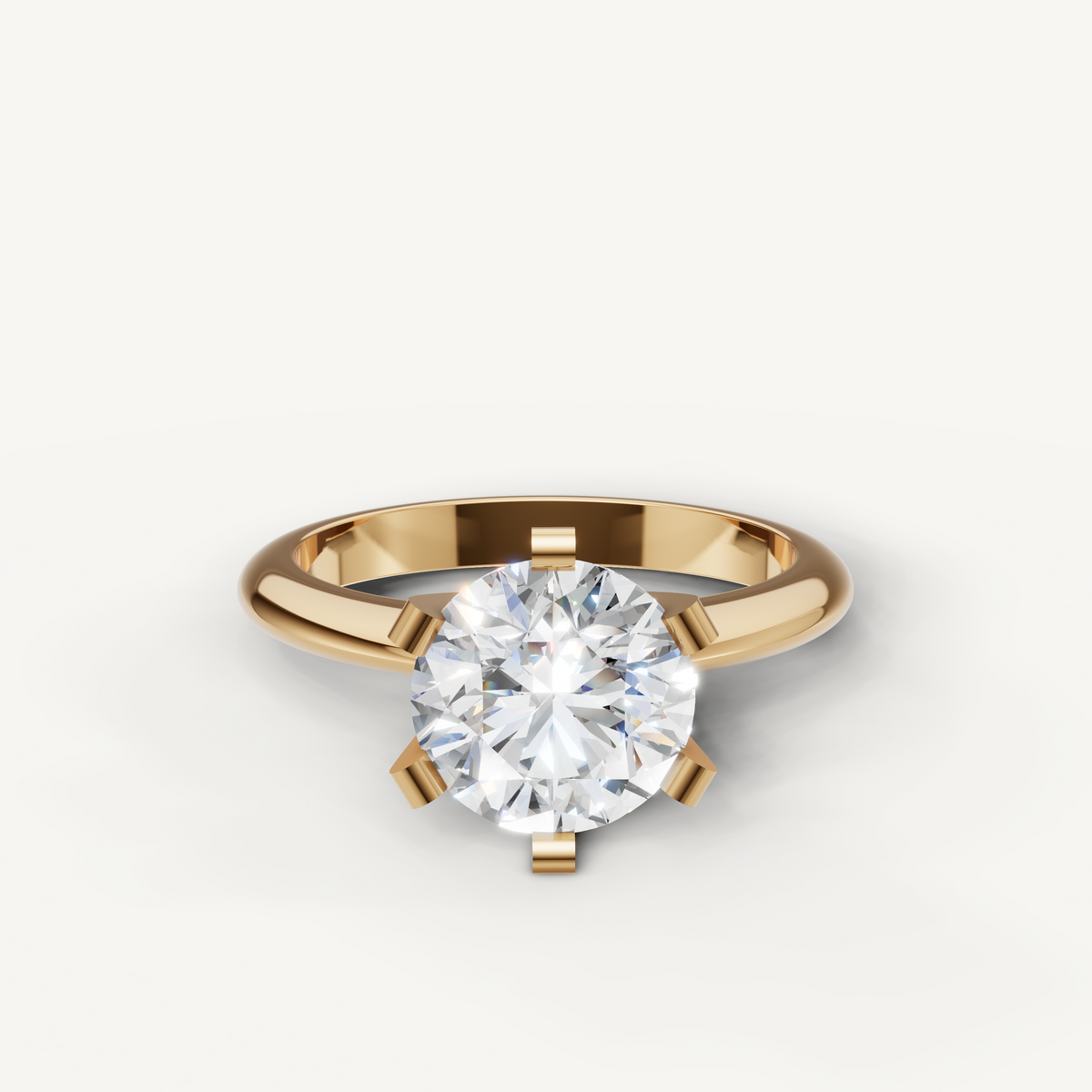
The short answer: A solitaire engagement ring is one center diamond on a plain band, so every choice shows. Pick the shape first, then the prongs: four prongs reveal the most diamond, six prongs add security and a rounder outline, and a bezel gives the most protection. A slender band of about 2 mm or less makes the center look larger, and a well-cut 1.00 ct round lab-grown diamond measures about 6.5 mm across.
The solitaire is the simplest engagement ring and the hardest to get exactly right, because there is nothing to hide behind. This guide walks through the decisions that shape how a solitaire looks on the hand: the diamond shape, the prongs, the height of the setting, the width of the band, the carat size and the metal color.
- A solitaire engagement ring holds a single center diamond on a band with no side stones, halo or pavé.
- Four prongs show the most diamond; six prongs hold it more securely and soften the outline of a round.
- A thinner band makes the center diamond look bigger, which is why many solitaires sit on a slender band of about 2 mm or less.
- A well-cut round measures about 6.5 mm at 1.00 ct, 7.4 mm at 1.50 ct and 8.2 mm at 2.00 ct.
What is a solitaire engagement ring, and why does it endure?
A solitaire engagement ring is a ring with one center diamond and a band without other stones. A solitaire can be four-prong, six-prong, claw or bezel.
It endures for three practical reasons. First, it puts all the attention on the diamond, which suits a well-cut stone with high color and clarity. Second, it pairs with almost any wedding band later, from a plain gold ring to a full eternity band. Third, it is easy to wear every day, with fewer small stones to check or clean.
The trade-off is honesty. With no halo to add sparkle around the edge, the cut quality of the center diamond carries the whole ring. That is why we set every Raul solitaire with an Excellent or Ideal cut lab-grown diamond, E–F color and VVS1–VVS2 clarity, the benchmark set out in The Raul Standard.
Which diamond shape looks best in a solitaire?
The best shape is the one that matches how she wants the ring to read from across a room: classic sparkle, length on the finger, or clean architectural lines. Here is what each popular shape does on the hand.
- Round: the most sparkle of any shape, a symmetrical outline and the most traditional look.
- Oval: round-style brilliance in an elongated outline that lengthens the finger and looks larger per carat than a round.
- Emerald: long step-cut facets that flash in broad planes of light; it reads tailored and quiet, and it shows clarity openly.
- Pear: a teardrop that combines a rounded end with a point, flattering and slightly romantic, worn point toward the fingertip.
- Cushion: soft square or rectangular corners with a pillowy outline and a gentle, vintage glow.
- Radiant: the clean corners of an emerald with brilliant faceting, so it sparkles hard while keeping a geometric edge.
The oval solitaire engagement ring is one of the most searched styles for a reason: it gives a lot of visible diamond for the weight and works on most hand shapes. Our diamond shapes guide covers proportions and length-to-width ratios in more detail.
Four prongs, six prongs, claw or bezel: which setting is best?
Four prongs suit someone who wants the most diamond visible, six prongs suit an active lifestyle, and a bezel suits anyone who wants maximum protection. Claw and double-claw prongs are refinements that change the look more than the security. Use this table to compare.
| Setting | Security | Light and visibility | Look on the hand | Best for |
|---|---|---|---|---|
| 4-prong | Good; one damaged prong leaves three holding the stone | Highest; the least metal around the diamond | Open and minimal; a round can read slightly square | Showing the most diamond |
| 6-prong | Very good; more contact points share the load | Slightly less exposed diamond than four prongs | A round reads rounder and more classic | Daily wear, larger rounds |
| Claw prong | Similar to standard prongs of the same count | High; tapered tips cover less of the stone | Fine, pointed tips that feel delicate | A lighter, more refined profile |
| Double-claw | Very good; each prong splits into two tips | Good | Detailed and slightly vintage | Elongated shapes and corners |
| Bezel | Highest; a metal rim wraps the whole edge | Less light enters from the sides | Smooth, modern, with a gold outline | Hands-on work, active lives |
A bezel setting is a thin metal rim that encircles the girdle of the diamond. It protects the edge from chips and rarely snags, and a well-cut stone still sparkles brightly from above. Our bezel engagement ring guide covers it in depth. For pear and marquise shapes, look for a V-prong or a protective prong at each point, since the tip is the most exposed part of the stone.
Should a solitaire sit low or high?
A low-set solitaire catches less on sweaters and gloves, while a higher setting lifts the diamond for more presence and lets a straight wedding band sit flush underneath. The right height depends on daily life and on the band you plan to pair.
The head is the part of the setting that holds the diamond. A low-profile head sits close to the band, which suits anyone who works with their hands or dislikes snagging. The catch is pairing: a very low head can block a straight wedding band, so you may need a contoured band that curves around it.
A cathedral setting raises the head on two arches of metal that sweep up from the band, a little like the arches of a church. It gives the diamond more height and the ring a more architectural side profile, and it usually leaves room for a straight band to sit tight against it.
Decide on the wedding band plan before you choose the head height. Our guide on how to match a wedding band to an engagement ring explains which heights pair with which bands.
Does band width change how big the diamond looks?
Yes. A thinner band makes the center diamond look larger because there is less metal to compare it against. A wider band reads bolder and sturdier, and it makes the same diamond look a touch smaller.
Engagement ring bands run across a wide range, roughly 2 to 6 mm, according to the International Gem Society. The same source notes that a thinner band makes a smaller diamond look bigger. Many modern solitaires sit on a slender band of about 2 mm or less, which gives a delicate look and leaves space for a wedding band beside it. Our 1 carat solitaires use a fine 1.10 mm band, while our six-prong round sits on a sturdier 2.69 mm band sized for larger stones. As with any ring worn daily, have the band and prongs checked by a jeweler every year or two.
What size is a 1, 1.5 or 2 carat solitaire?
A well-cut round lab-grown diamond measures about 6.5 mm across at 1.00 ct, about 7.4 mm at 1.50 ct and about 8.2 mm at 2.00 ct. Carat is weight, not size, so cut proportions shift these numbers slightly.
| Round carat weight | Approximate diameter | How it reads on the hand |
|---|---|---|
| 1.00 ct | 6.5 mm | Classic and clearly visible; suits most finger sizes |
| 1.50 ct | 7.4 mm | Noticeably fuller, without feeling oversized |
| 2.00 ct | 8.2 mm | A confident statement, especially on a slim band |
| 2.50 ct | 9.0 mm | Bold; best with six prongs or a bezel |
These diameters follow standard round diamond size charts for ideal or near-ideal cuts, such as this carat-to-millimeter chart. A poorly cut stone hides weight in its depth and faces up smaller. Elongated shapes such as oval and pear spread their weight over a longer outline, so they usually look larger face-up than a round of the same carat.
Raul Diamonds sets IGI-certified center diamonds, 1.00 ct and above. GIA available on request for custom orders. The IGI report confirms the measurements to the hundredth of a millimeter.
Which metal color suits a solitaire?
White gold gives the most icy, contemporary look, yellow gold feels warm and classic, and rose gold reads soft and romantic. With E–F color lab-grown diamonds, all three look crisp, because the stone has no visible tint for the metal to amplify.
White gold blends into the diamond and makes it look a little bigger, since the prongs disappear. Yellow gold creates contrast that outlines the shape, which flatters emerald and radiant cuts. Rose gold flatters warmer skin tones and pairs well with ovals and pears. We craft every solitaire in 14K or 18K yellow, white or rose gold; our metal guide explains the difference in durability and tone.
Our picks
- Round Brilliant Lab Grown Diamond Six-Prong Solitaire Ring in 14K Gold: the definitive classic, with six prongs that keep a larger round secure and perfectly round in outline.
- 1 Carat Round Brilliant Lab Grown Diamond Solitaire Ring: a slender, minimal band that lets a 1, 1.5 or 2 ct round do the talking.
- 1 Carat Oval Cut Lab Grown Diamond Solitaire Ring: the oval solitaire in its purest form, elongated and finger-flattering.
- 1 Carat Emerald Cut Lab Grown Diamond Solitaire Ring: step-cut flashes and clean lines for a tailored, quiet look.
- Teardrop Pear Lab-Grown Diamond Solitaire Engagement Ring: a graceful teardrop in sizes from 2 ct for a softer, romantic outline.
See every style in our solitaire engagement rings collection.
Questions
What is the difference between a solitaire and a solitaire diamond ring?
They mean the same thing. A solitaire diamond ring has one center diamond and no other stones on the top of the ring. The term describes the single stone, not a specific setting, so a solitaire can use prongs or a bezel.
Is a four-prong solitaire secure enough for everyday wear?
Yes, for most people. A well-made four-prong setting holds a diamond securely, and the prongs should be checked once or twice a year. If you work with your hands or choose a larger stone, six prongs or a bezel add peace of mind.
What is the most popular solitaire shape?
The round brilliant remains the classic solitaire because it sparkles the most and suits every hand. The oval is a strong alternative for anyone who wants a longer look and more visible size per carat.
Can I add a halo or side stones to a solitaire later?
Usually not without remaking the setting, so decide on the design you love now. The simplest way to add sparkle later is a diamond wedding band or an eternity band stacked beside the solitaire.
How big does a 1 carat solitaire look?
A well-cut 1.00 ct round measures about 6.5 mm across, which reads clearly on most fingers. An oval or pear of the same weight usually looks larger because its outline is longer.
Do Raul Diamonds solitaires come with a diamond report?
Yes, for center diamonds of 1.00 ct and above. Raul Diamonds sets IGI-certified center diamonds, 1.00 ct and above. GIA available on request for custom orders.
A solitaire is a short list of decisions that matter. If you would like to see shapes, prongs and band widths side by side before you choose, book a free consultation by video or phone, and we will help you build the ring that feels made for her hand.
More from the Journal.
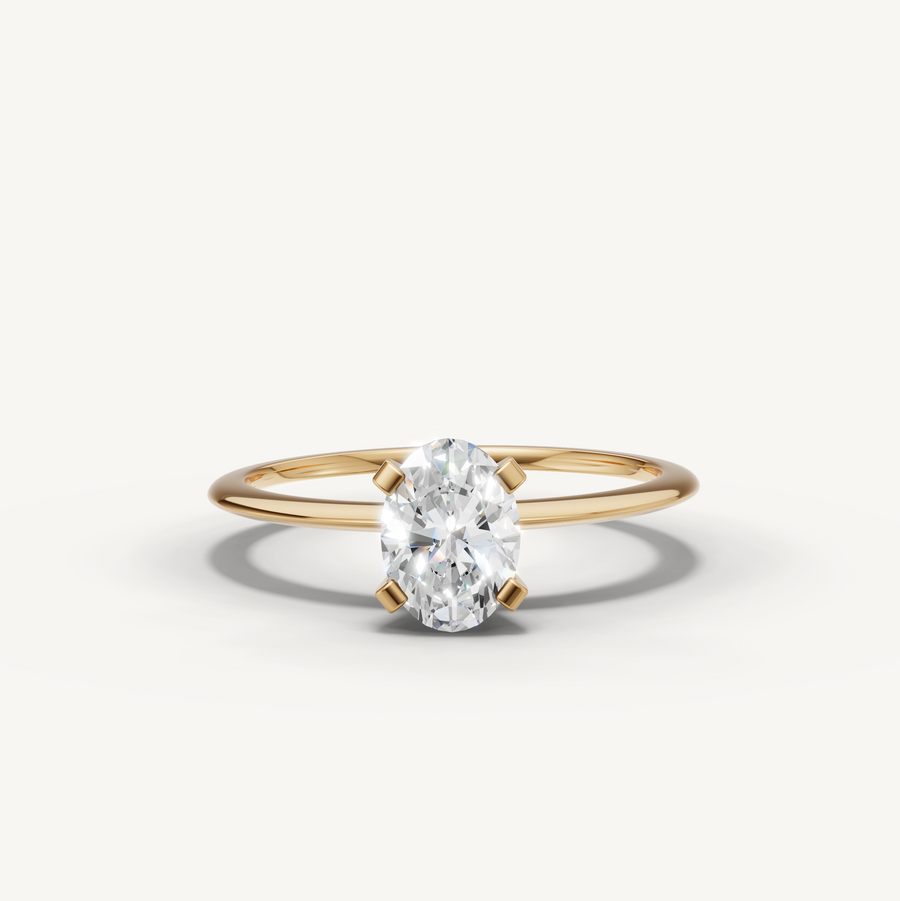
Do lab-grown diamonds pass a diamond tester?
Lab-grown diamonds pass standard diamond testers because they are diamond. This guide explains how testers work, why moissanite and some HPHT stones can confuse them, and how to confirm a lab-grown diamond...
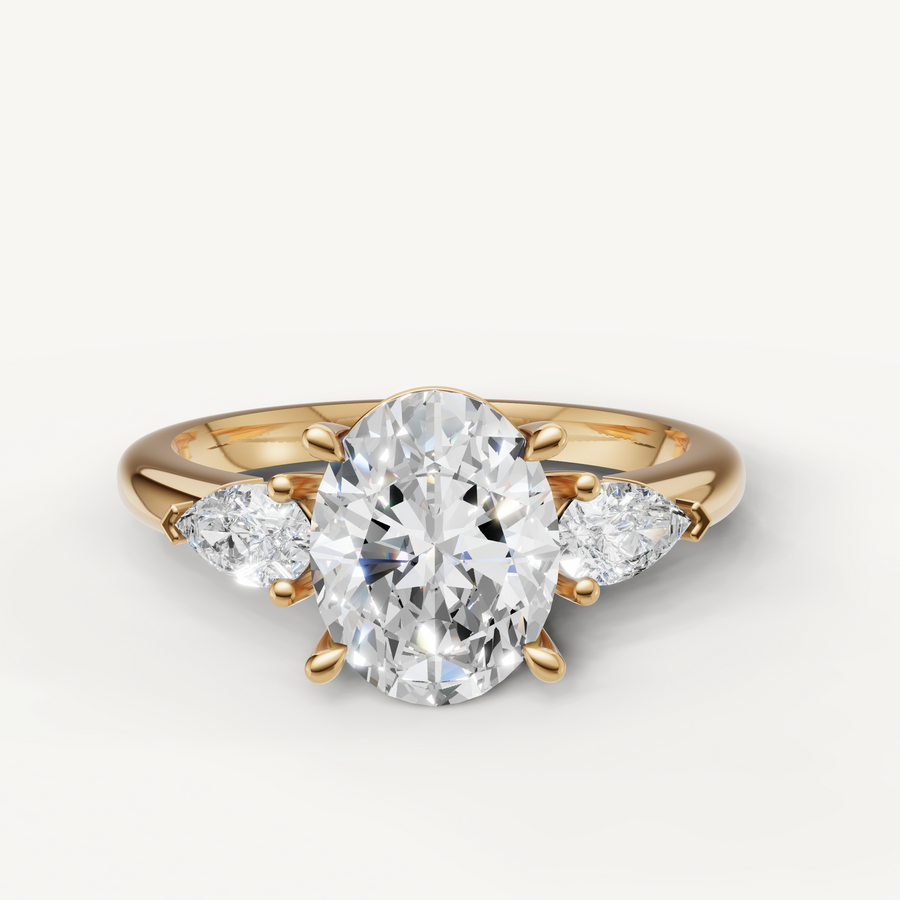
Engagement ring insurance: how it works and what to ask
A neutral, US-focused guide to engagement ring insurance: how homeowners sublimits, scheduled riders and standalone jewelry policies differ, what key terms mean, which documents to keep and which questions to ask.
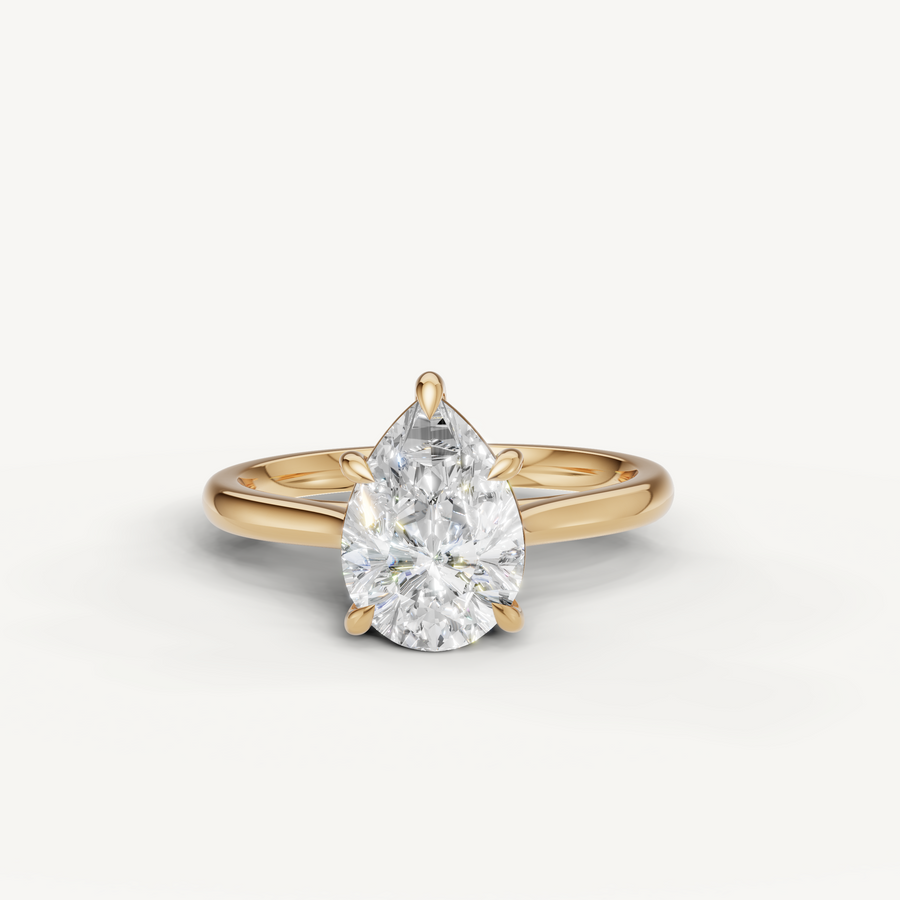
Pear engagement rings: how to choose the shape, ratio and setting
A practical guide to pear-shaped engagement rings: how to judge symmetry and the bow-tie, which length-to-width ratio suits your hand, which way to wear the point, and the settings and bands that...
Talk it through with our team.
A free 30-minute video or phone consultation, at your pace.