


The Raul Journal· Diamond Education
IGI-certified lab-grown diamonds: what the report tells you, and what GIA changed
The short answer: An IGI-certified lab-grown diamond comes with a report from the International Gemological Institute that grades its color, clarity and cut, records its carat weight, measurements and proportions, states how it was grown (CVD or HPHT), and matches a report number laser-inscribed on the stone. GIA stopped giving lab-grown diamonds individual color and clarity grades on October 1, 2025, and now labels them only "Premium" or "Standard." For a buyer who wants to see exact grades, an IGI report is now the more detailed of the two.
Most people meet the IGI name on a product page and wonder whether it carries the same weight as GIA. This guide covers what an IGI report for a lab-grown diamond lists, what GIA changed in 2025, and how to verify a report yourself.
- An IGI lab-grown diamond report grades color, clarity and cut, and records carat weight, measurements, proportions, polish, symmetry and fluorescence.
- IGI reports disclose the growth method, CVD or HPHT, and note whether the stone shows signs of post-growth treatment.
- Since October 1, 2025, GIA describes lab-grown diamonds as "Premium" or "Standard" instead of giving letter color grades and clarity grades.
- Every IGI report number can be checked against IGI's online database, and the same number is usually laser-inscribed on the diamond's girdle.
What does IGI certified mean for a lab-grown diamond?
IGI certified means an independent laboratory, the International Gemological Institute, has examined the diamond, confirmed it is laboratory-grown, and graded it in a written report. The retailer does not grade the stone. A lab with no stake in the purchase does.
That independence is the point. Two diamonds can look identical in a photo and still differ by a full color or clarity grade. The report gives you a fixed, third-party description of the exact stone you are buying, tied to it by a unique number.
The report also states plainly that the diamond is laboratory-grown. In the United States, the FTC Jewelry Guides treat a lab-grown diamond as a diamond, provided it is clearly disclosed as lab-grown. A grading report and a girdle inscription make that disclosure permanent.
What does an IGI lab-grown diamond report list?
An IGI Laboratory Grown Diamond Report lists the stone's identity, its grades, its physical dimensions and how it was made. Reading it top to bottom, you will find:
- Report number and date. The number is the stone's ID, used to verify the report online.
- Shape and cutting style. For example, round brilliant, oval brilliant or emerald cut.
- Measurements. Length, width and depth in millimeters, such as 6.03 x 4.82 x 3.26 mm. This tells you how large the diamond looks face-up, which carat weight alone does not.
- Carat weight. Weight to two decimal places.
- Color grade. A letter on the D-to-Z scale. D is colorless; each step down shows slightly more warmth.
- Clarity grade. A scale that runs from FL and IF down through VVS, VS, SI and I. VVS1 and VVS2 mean inclusions are very, very difficult to see even at 10x magnification.
- Cut, polish and symmetry. Round brilliants receive a cut grade. Fancy shapes are judged on polish and symmetry.
- Fluorescence. How the diamond reacts to ultraviolet light, from None to Very Strong.
- Proportions. Table and depth percentages, crown and pavilion angles, girdle thickness and culet. These drive brightness and sparkle.
- Inscription. The text laser-inscribed on the girdle, typically "LABGROWN" with the IGI report number.
- Comments. This is where the growth method appears.
The comments line deserves a closer look. Since January 2021, IGI reports for lab-grown diamonds name the growth process, CVD (chemical vapor deposition) or HPHT (high pressure, high temperature), and identify stones that are "as grown," with no indication of post-growth treatment. Neither method makes a diamond better or worse on its own; the grades tell you how it looks.
For a line-by-line walkthrough with a sample, see your IGI report explained.
What did GIA change for lab-grown diamonds in 2025?
On October 1, 2025, GIA stopped applying its natural-diamond color and clarity scales to D-to-Z lab-grown diamonds and replaced them with a single overall descriptor: Premium or Standard. GIA announced the change on its own site in its notice on quality assessment for D-to-Z laboratory-grown diamonds, and retailer coverage such as Whiteflash's summary describes the same tiers.
The new document is called a Laboratory-Grown Diamond Quality Assessment rather than a report. To be called Premium, a stone must meet every one of these: D color, VVS clarity or higher, Excellent polish and symmetry, and an Excellent cut grade for round brilliants. Standard covers stones with at least VS clarity, E to J color, Very Good polish and Very Good symmetry (Good symmetry is accepted for fancy shapes), and a Very Good cut on rounds. A stone that falls below the Standard minimums receives no GIA assessment at all.
GIA still laser-inscribes each assessed stone. What a buyer loses is precision. Under the new system, an E-color VVS1 stone and a J-color VS2 stone can both carry the same word, Standard. If you care where your diamond sits within that range, you need the grades, and that is what an IGI report still provides.
| What each report shows for a lab-grown diamond | IGI report | GIA quality assessment (after Oct 1, 2025) |
|---|---|---|
| Overall result | Individual grades for each quality factor | One descriptor: Premium or Standard |
| Color | Letter grade on the D-to-Z scale | No letter grade; Premium requires D, Standard covers E to J |
| Clarity | Specific grade, such as VVS2 or VS2 | No grade; Premium requires VVS or higher, Standard requires at least VS |
| Cut | Cut grade on round brilliants; polish and symmetry on all shapes | Used as tier criteria: Excellent for Premium, Very Good for Standard (round brilliants only) |
| Growth method | Stated in comments: CVD or HPHT, with "as grown" where applicable | Not detailed in GIA's announcement |
| Laser inscription | "LABGROWN" and the IGI report number | "Laboratory-Grown" and the GIA quality assessment number |
| Stones below the minimums | Graded on the same scales | Not assessed |
Is IGI certification as good as GIA for lab-grown?
For lab-grown diamonds today, IGI certification is the more useful document for most buyers, because it gives you exact grades where GIA now gives a category. Both are respected, independent laboratories. The difference is what each one now chooses to tell you.
That is also why most lab-grown center stones sold in the United States come with IGI reports. IGI has graded lab-grown diamonds on the full 4Cs scales for years, its reports are widely used by US retailers, and the format lets you compare two stones line by line. Lab-grown is also now the majority choice: The Knot's 2026 Real Weddings Study, as reported by IDEX, found lab-grown diamonds in 61% of US engagement rings for couples who married in 2025.
We cover the two labs' histories, fees and grading philosophies in our side-by-side IGI vs GIA guide. This post stays with the report you will actually hold.
How do you read and verify an IGI report?
You verify an IGI report by entering its report number in the Verify Your Report tool on igi.org and confirming that every line matches the paper or PDF you were given. The whole check takes a few minutes.
- Find the report number. It sits at the top of the report. On IGI lab-grown reports it typically begins with "LG".
- Look it up on igi.org. Use the Verify Your Report tool and enter the number exactly. The result should show the same shape, carat weight, measurements and grades.
- Match the measurements. Measurements are the hardest detail to fake. If the millimeter figures match the stone's listing, you are looking at the right diamond.
- Check the grades against the listing. Color, clarity and cut on the report should match what you were sold.
- Read the comments. Confirm the growth method and whether the stone is described as "as grown."
- Ask to see the inscription. Under magnification, the girdle inscription should show the same number.
Which Raul diamonds come with an IGI report?
At Raul Diamonds, our line is simple: IGI-certified center diamonds, 1.00 ct and above. GIA available on request for custom orders. Each of those center stones ships with its original IGI report, and our center diamonds are Excellent or Ideal cut, E–F color and VVS1–VVS2 clarity.
Smaller stones, such as accents, pavé and side diamonds under 1.00 ct, are hand-selected lab-grown diamonds. They do not come with individual reports, which is standard practice across fine jewelry for stones of that size. We choose them by eye to match the center stone's color and brightness. You can read more about how we choose every stone in the Raul Standard.
Our picks
Each of these rings holds a center diamond of 1.00 ct or more, so each ships with its own IGI report.
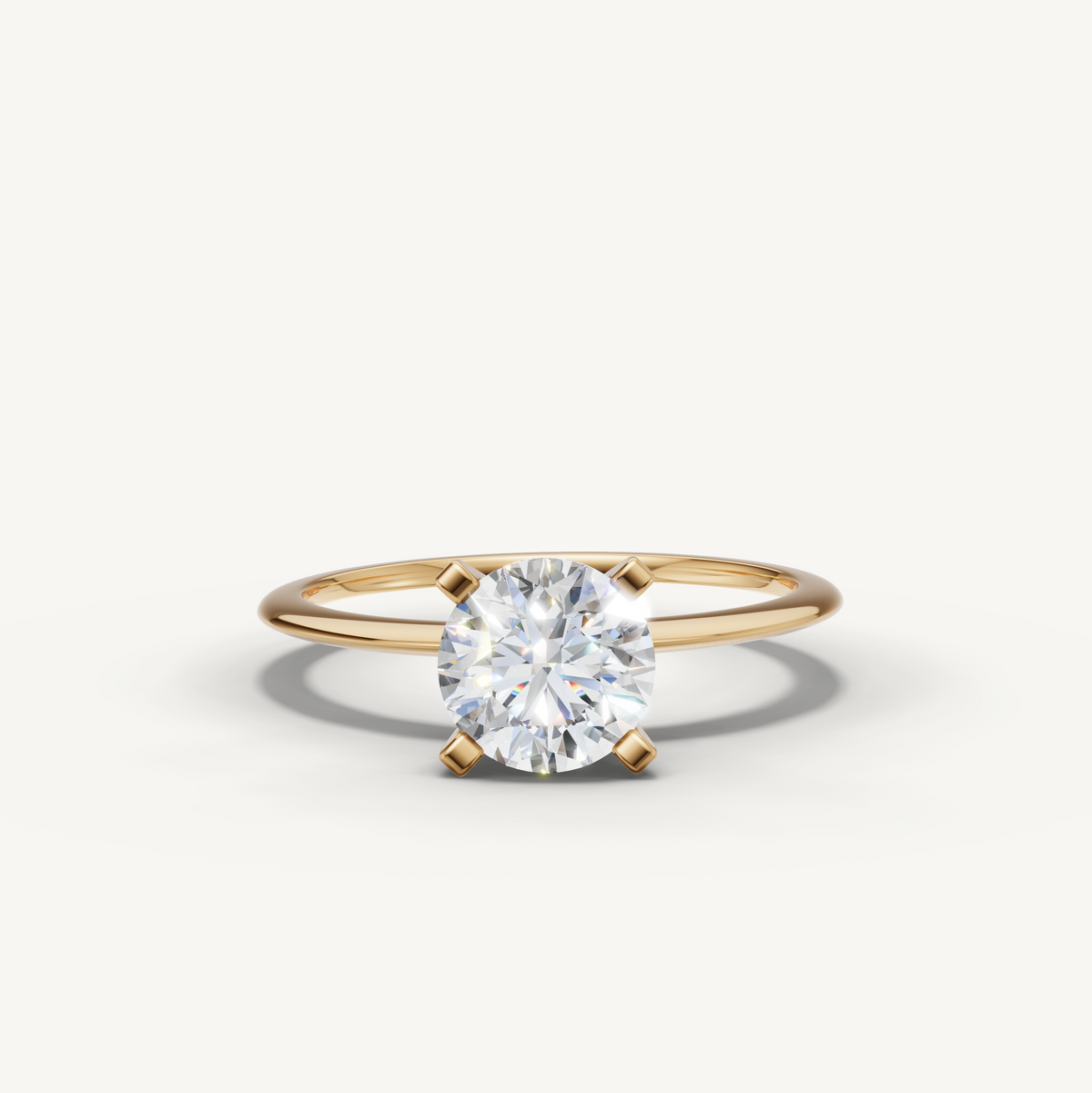
- 1 Carat Round Brilliant Lab Grown Diamond Solitaire Ring in 14K Yellow Gold: the clearest way to see an IGI cut grade at work, on a slim 1.10 mm band.
- 1 Carat Oval Cut Lab Grown Diamond Solitaire Ring in 14K Yellow Gold: an elongated shape where comparing report measurements pays off most.
- 1 Carat Emerald Cut Lab Grown Diamond Solitaire Ring in 14K Gold: step facets show clarity plainly, so VVS clarity on the report matters here.
- Round Brilliant Lab Grown Diamond Six-Prong Solitaire Ring in 14K Gold: six prongs and center stones from 2 ct, for a larger report-backed round.
See every style in our solitaire engagement rings collection.
Questions
Is an IGI-certified lab-grown diamond a real diamond?
Yes. A lab-grown diamond has the same chemical makeup and crystal structure as a mined diamond, and the FTC treats it as a diamond as long as it is clearly disclosed as lab-grown. The IGI report confirms the stone is laboratory-grown and grades it on the same scales used for mined diamonds.
Does GIA still grade lab-grown diamonds?
GIA still assesses lab-grown diamonds, but since October 1, 2025 it no longer gives them individual color and clarity grades. Instead, it describes each eligible stone as Premium or Standard and laser-inscribes it with "Laboratory-Grown" and an assessment number.
Is IGI or GIA better for a lab-grown engagement ring?
For most lab-grown buyers, IGI is more useful, because its report lists exact color, clarity and cut grades and states the growth method. GIA's current assessment groups stones into two broad tiers, so it tells you less about a specific diamond.
How do I check that an IGI report is genuine?
Enter the report number in the Verify Your Report tool on igi.org and confirm the shape, carat weight, measurements and grades match your document. Then ask a jeweler to check that the number laser-inscribed on the diamond's girdle matches the report.
What do CVD and HPHT mean on an IGI report?
They are the two ways lab-grown diamonds are made: chemical vapor deposition and high pressure, high temperature. Neither is better by itself. The color, clarity and cut grades on the report tell you how the finished diamond looks.
Do the small diamonds in my ring come with IGI reports?
At Raul Diamonds, center diamonds of 1.00 ct and above come with IGI reports. Accent and pavé diamonds under 1.00 ct are hand-selected lab-grown diamonds without individual reports, which is standard practice for stones of that size.
Want a second pair of eyes on a report, or help comparing two stones? Book a free consultation by video or phone, and we will go through every line together.
More from the Journal.
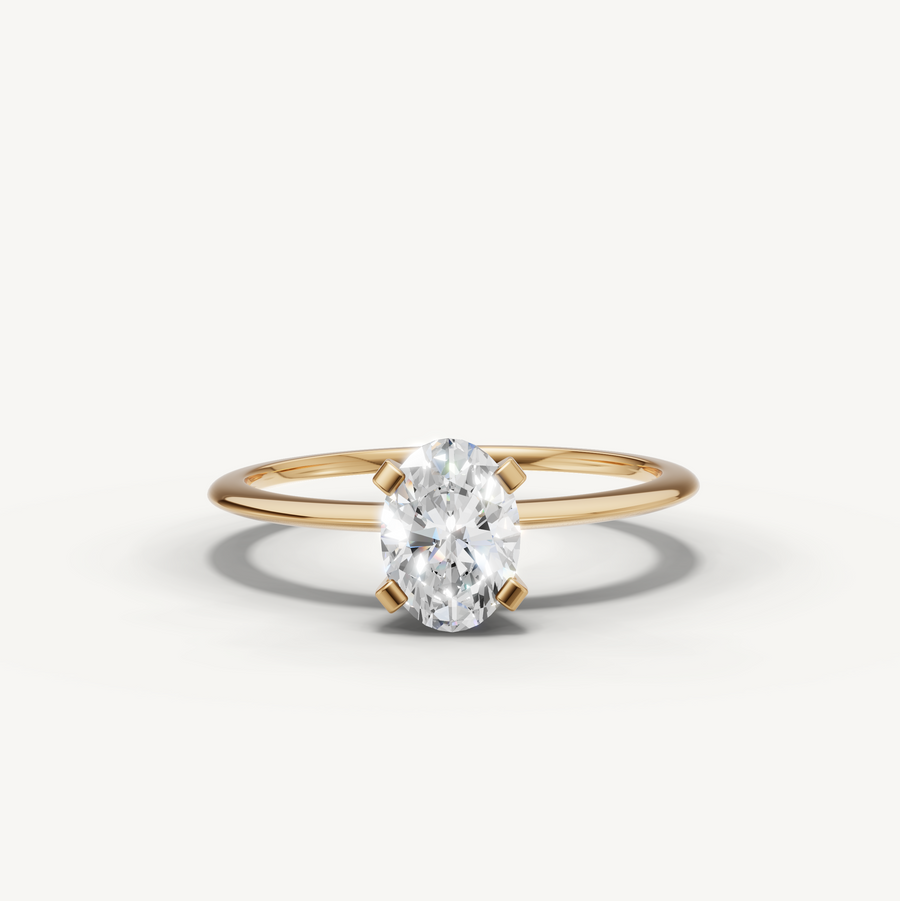
Are lab-grown diamonds real? What they are, and how to tell
A lab-grown diamond has the same carbon crystal, hardness and sparkle as a mined diamond; only its origin differs. Here is how it compares to mined diamonds and simulants, how labs identify...
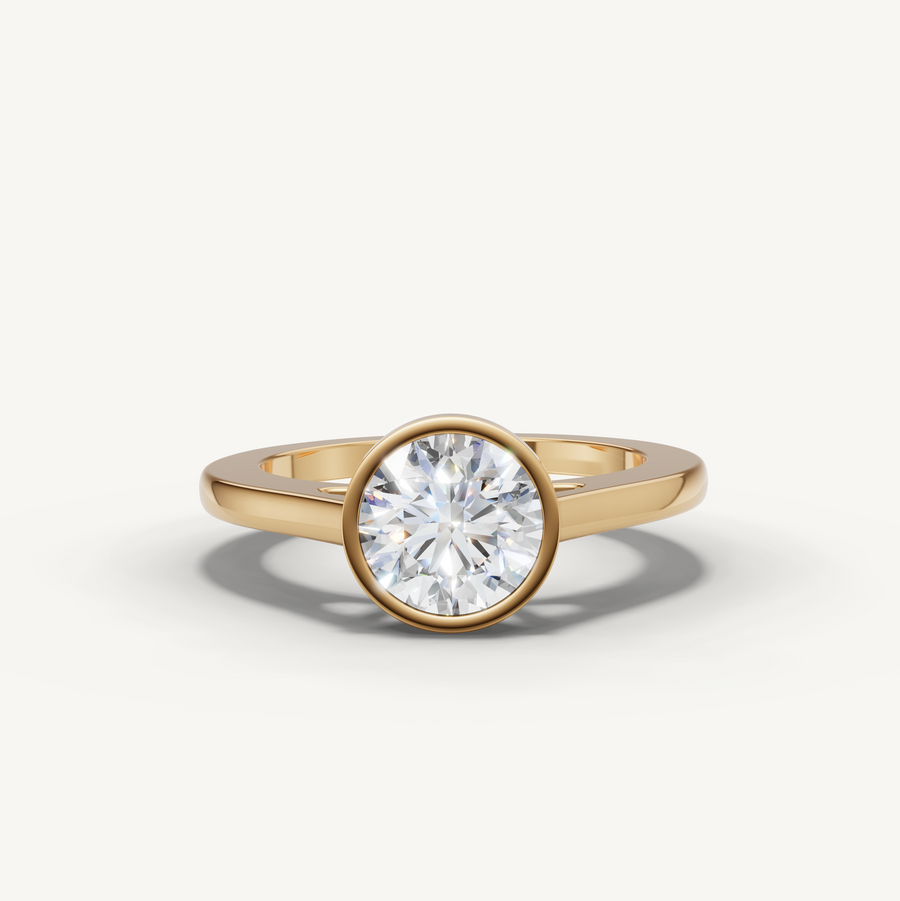
Bezel engagement rings: the modern setting, explained
A guide to bezel engagement rings: how the setting works, full versus half bezel, how it compares with prongs, which shapes suit it, and how it stacks with a wedding band.
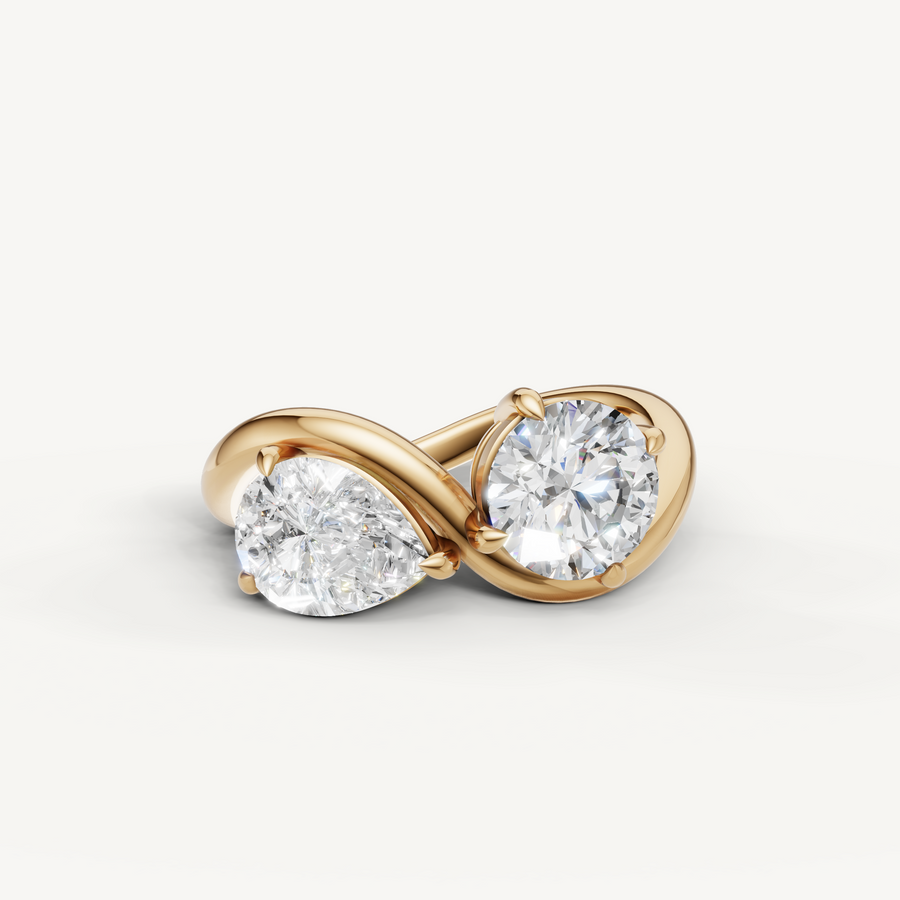
Toi et moi engagement rings: how to choose two stones that belong together
A guide to toi et moi engagement rings: the meaning, how to pair shapes and sizes, how carat weight is listed, and how a two stone ring wears with a wedding band.
Talk it through with our team.
A free 30-minute video or phone consultation, at your pace.