


The Raul Journal· Engagement Rings
Three stone engagement rings: a complete guide

The short answer: Three stone engagement rings set one center diamond between two smaller side stones. They are often said to stand for your past, present and future. The best ones keep the center clearly dominant, choose side stones whose shape complements the center, and use a setting secure enough for daily wear.
A three stone design has a balance few other rings offer. The center diamond leads, the side stones frame it, and the whole ring sits wider across the finger. This guide explains what the design means, how to pick side stone shapes, how to think about proportions, and which settings hold up best.
What three stone engagement rings mean
The three diamonds are often said to symbolize your past, your present and your future together. Some couples read them differently: the two of you, joined by what you are building. Others simply love the symmetry. You will also see the design called a trilogy ring; it means the same thing.
Beyond meaning, the design has a practical advantage. Two side stones add width and light without asking the center diamond to do all the work. A center of moderate size reads larger and more finished when it is framed.
Side stone shapes, and what each one does
The side stones decide the personality of a three stone ring. These are the side stone shapes in our current collection:
| Side stone | The look | Pairs well with | Good to know |
|---|---|---|---|
| Round | Soft, classic, lively sparkle | Round, oval, cushion centers | The most forgiving choice for everyday wear |
| Pear | Romantic, flowing; points draw the eye to the center | Round, oval, princess, radiant centers | Pointed tips are protected by V-prongs |
| Trillion | Crisp, geometric, modern | Emerald, Asscher, princess, radiant centers | Sharp corners need secure prongs or a protective setting |
| Baguette (straight or tapered) | Clean, Art Deco, architectural | Emerald, radiant, cushion, oval centers | A step cut: broad flashes rather than many small sparkles |
| Emerald | Tailored, gallery-like | Princess, oval, marquise centers | Shows clarity openly, like all step cuts |
| Kite | Distinctive, angular | Elongated cushion centers | An unusual choice for a ring that feels custom |
As a rule of thumb, rounded side stones soften a ring and angular side stones sharpen it. Choose the mood first, then the shape.
Center and side stone proportions
A three stone ring works when the center diamond is clearly the hero. Side stones should frame the center, not compete with it. When the sides come too close in size, the ring reads as a row of stones rather than a centerpiece with support.
When you compare rings, look at the total carat weight (CTW). It adds up all three diamonds, not just the center. In our collection you will see three stone rings listed at 1.70, 1.90, 2.50 and 3.40 CTW. Two rings with the same CTW can look very different depending on how that weight is split between the center and the sides.
For a sense of scale, here are approximate face-up diameters for round diamonds: 1.00 ct is about 6.4 mm, 1.50 ct about 7.4 mm, and 2.00 ct about 8.1 mm. Elongated centers such as oval add finger coverage; an oval with a length-to-width ratio between 1.30 and 1.50 is a popular range. An elongated center also gives the side stones a natural stopping point at its widest part.
Pairing shapes: brilliant cuts and step cuts
Diamond cuts fall into two families. Brilliant cuts such as round, oval, pear, princess, cushion and radiant sparkle in many small flashes. Step cuts such as emerald, Asscher and baguette show broad, mirror-like flashes and reveal clarity openly.
- Same family: an emerald center with baguette sides, or an oval center with pear sides, reads calm and unified.
- Mixed families: a brilliant center with step-cut sides adds contrast. The center sparkles while the sides add clean lines.
- Watch for the bow-tie. Oval, pear and marquise diamonds can show a darker bow-tie shape across the center. Choose a well-cut stone; every Raul center diamond is Excellent or Ideal cut.
For more on how each shape behaves, see our diamond shapes guide.
Settings and band styles for three stone rings
The setting protects three diamonds instead of one, so it deserves attention.
- Prongs. The classic choice, letting the most light into each stone. Pointed shapes such as pear, marquise and princess corners sit in V-prongs that protect the tips.
- Hidden halo. A thin row of small diamonds under the center stone, visible from the side. It adds sparkle without changing the clean face-up look.
- Pavé band. Small diamonds along the shank for a fully brilliant ring.
- Twisted or infinity band. A softer, more romantic silhouette.
- Engraved or vintage-inspired band. Chevron engraving, milgrain and tapered details for a heirloom feel.
Plan the wedding band early. A three stone head is wider than a solitaire, so a straight band may leave a gap. Many people choose a curved or contour band that follows the outline of the stones; see our curved and contour bands.
Gold, quality and budget
Every Raul center diamond is Excellent or Ideal cut, E to F color and VVS1 to VVS2 clarity, with an independent IGI grading report. Lab-grown diamonds typically cost 50 to 70% less than mined diamonds of the same grade, which leaves room in the budget for a larger center or richer gold.
In our current collection, three stone engagement rings start from $1,226 at the time of writing (October 2026). Price rises with the center carat you choose and with the gold. Across all of our engagement rings, 18K versions cost more than 14K versions of the same ring, because 18K contains 75% gold compared with 58.3% in 14K. Yellow, white and rose are all available. Learn the trade-offs in our metal guide and 4Cs guide.
Our picks
Prices are from our current collection at the time of writing (October 2026).
- Oval Lab Grown Diamond Three Stone Engagement Ring with Pear Side Stones: soft, flowing and the most romantic pairing, from $1,491.
- Emerald Cut Lab Grown Diamond Three Stone Engagement Ring with Trillion Side Stones: a crisp step-cut center with geometric sides, from $1,455.
- Cushion Cut Lab Grown Diamond Three Stone Engagement Ring with Tapered Baguettes: an Art Deco frame for a soft cushion center, from $1,226.
- Elongated Oval Lab Grown Diamond Three Stone Engagement Ring with Round Side Stones: classic round sides beside an elongated center, from $1,497.
- Elongated Cushion Lab Grown Diamond Three Stone Ring with Kite Side Stones: distinctive kite sides for a ring that feels one of a kind, from $3,606.
See every design in our three stone engagement rings collection.
Questions
What do three stone engagement rings symbolize?
They are often said to represent your past, present and future together. Many couples simply love the balance of a center diamond framed by two side stones.
Are the side stones smaller than the center?
Yes, in a classic three stone ring the side stones are smaller so the center leads. Check the total carat weight, which includes all three diamonds, when you compare rings.
Which side stone shape is the most practical?
Round side stones have no points, which makes them the most forgiving for daily wear. Pear, trillion and kite stones need secure prongs to protect their tips and corners.
Do three stone rings work with a straight wedding band?
Sometimes. The wider head can leave a gap beside a straight band. A curved or contour band often sits closer; try both before you decide.
Can I design my own three stone ring?
Yes. Our custom design service starts from $800. You receive a 3D render within 48 hours (business days) of your consultation, with unlimited revisions, and crafting takes 2 to 3 weeks after approval.
Choosing three diamonds instead of one brings a few more decisions. We are happy to help you make them. Book a free 30-minute consultation by video or phone and we will compare side stone shapes with you.
More from the Journal.
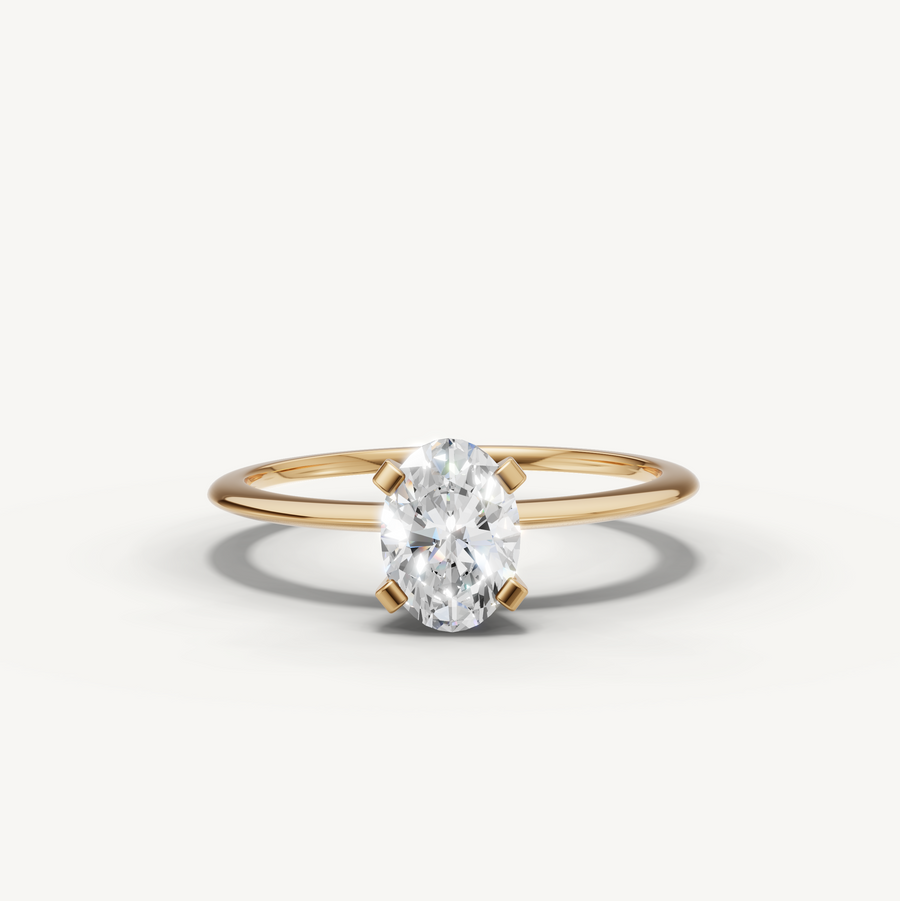
Are lab-grown diamonds real? What they are, and how to tell
A lab-grown diamond has the same carbon crystal, hardness and sparkle as a mined diamond; only its origin differs. Here is how it compares to mined diamonds and simulants, how labs identify...
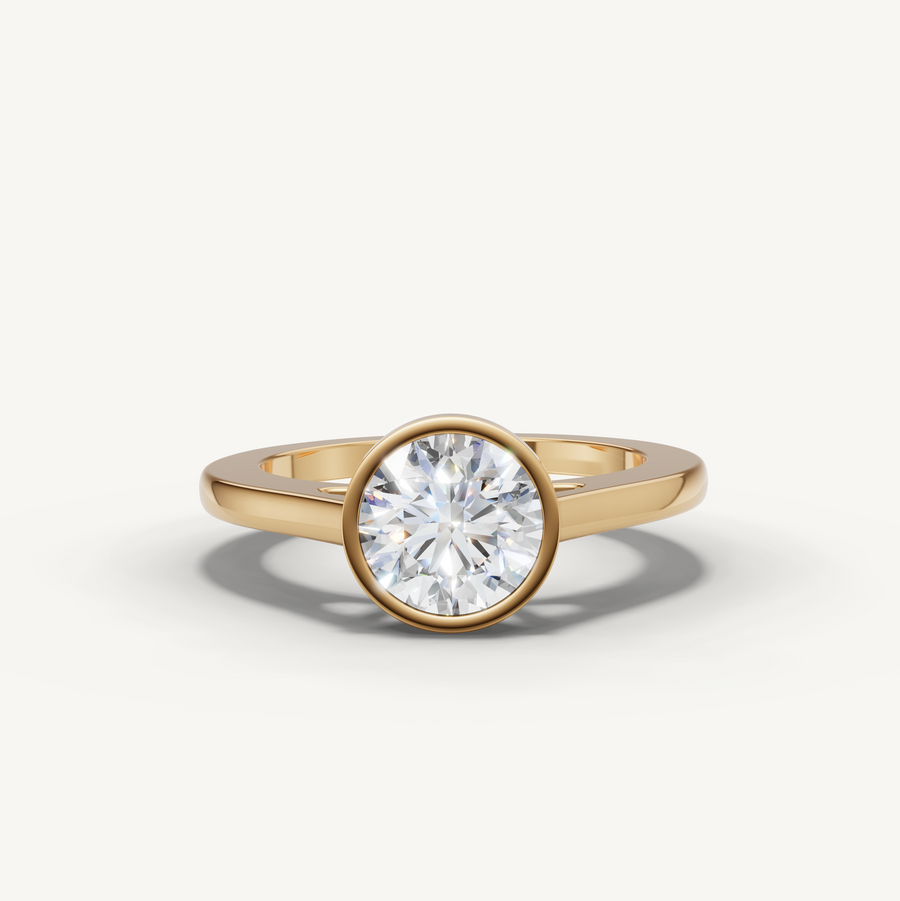
Bezel engagement rings: the modern setting, explained
A guide to bezel engagement rings: how the setting works, full versus half bezel, how it compares with prongs, which shapes suit it, and how it stacks with a wedding band.
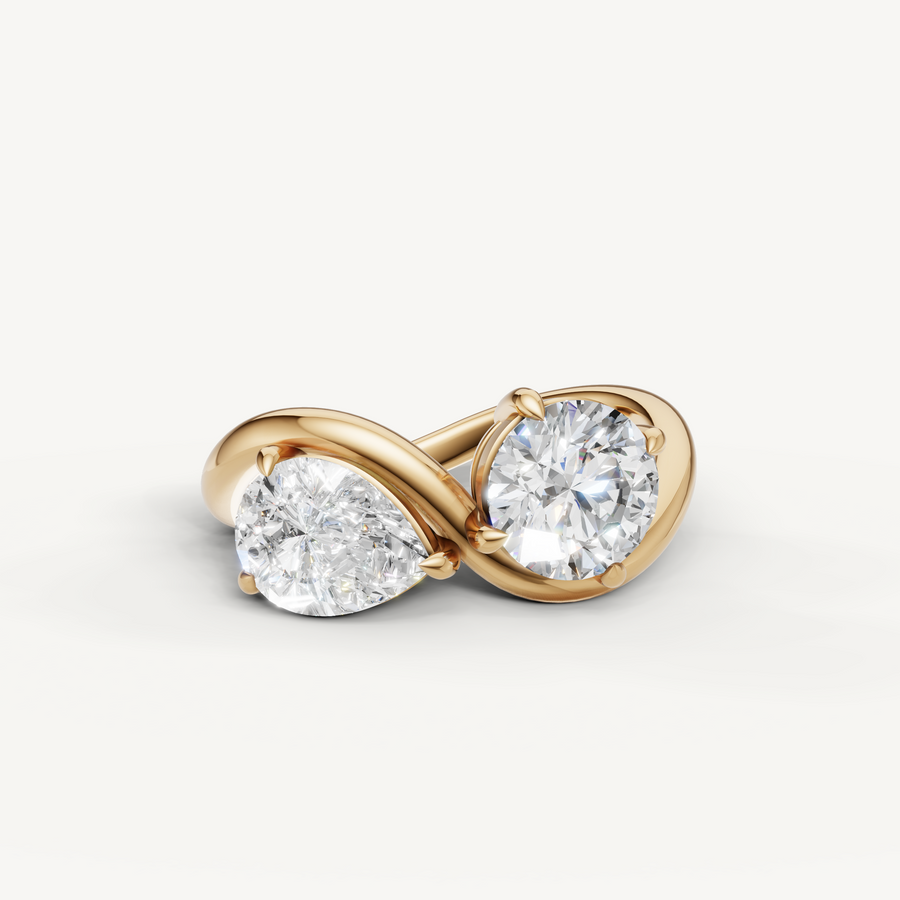
Toi et moi engagement rings: how to choose two stones that belong together
A guide to toi et moi engagement rings: the meaning, how to pair shapes and sizes, how carat weight is listed, and how a two stone ring wears with a wedding band.
Talk it through with our team.
A free 30-minute video or phone consultation, at your pace.