


The Raul Journal· Diamond Education
How much does a lab grown diamond engagement ring cost?
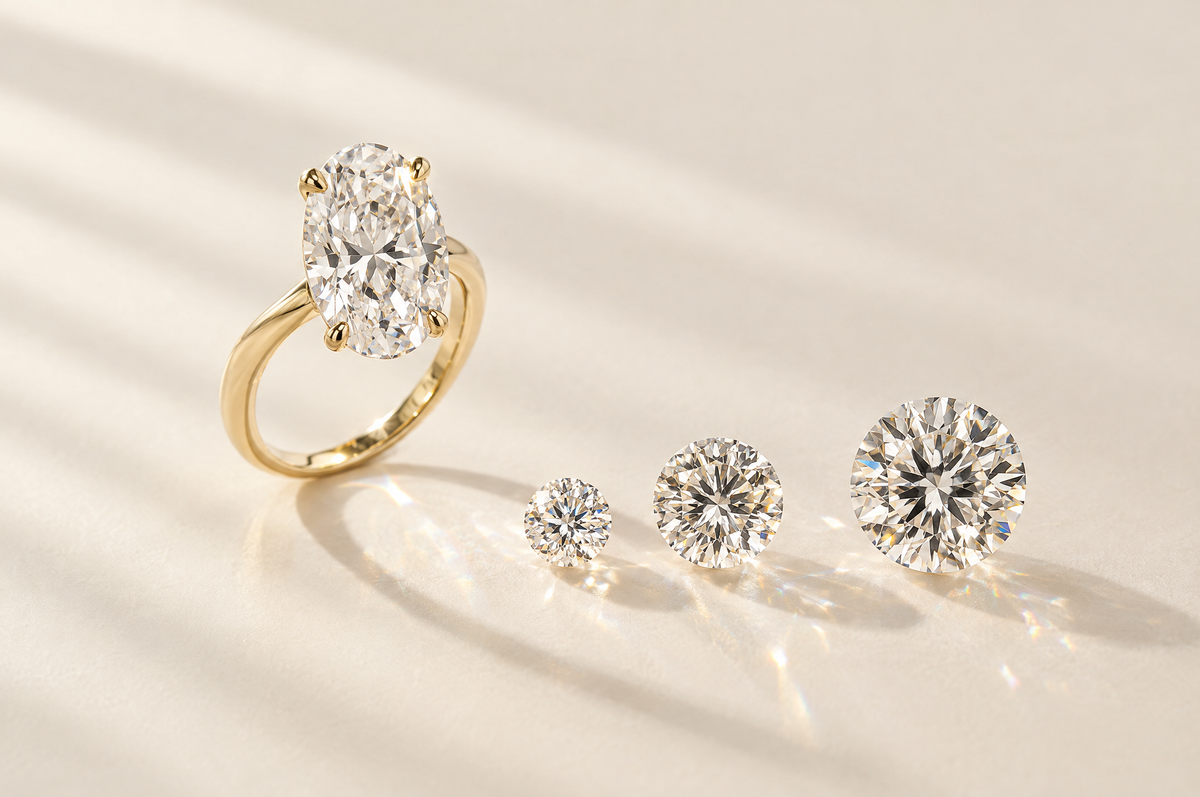
The short answer: At Raul Diamonds, a lab-grown diamond engagement ring starts at $750 for a 1 carat solitaire in 14K gold. Across our collection, the median 1 carat ring in 14K gold is $1,253 and the median 2 carat ring is $1,556 (October 2026 prices). For context, US couples spent an average of $4,300 on a lab-grown engagement ring in 2025, according to The Knot. Carat, setting and gold karat decide where your ring lands.
How much does a lab-grown diamond engagement ring cost at Raul Diamonds?
Many price guides quote an "average" with no source behind it. We would rather show you our own numbers. Every figure below comes from the prices on our product pages in early October 2026, across all 398 engagement rings we offered then.
Here is the shape of the collection:
- Our lowest starting price is $750, for a 1 carat solitaire in 14K gold.
- The median starting price is $1,640.
- 150 of our engagement rings start under $1,500, 380 start under $3,000, and 397 start under $5,000.
A starting price is the lowest option for each ring, usually the smallest carat in 14K gold. Your final price depends on the choices you make, which we break down below.
One thing does not change with price. Every Raul center diamond is Excellent or Ideal cut, E–F color and VVS1–VVS2 clarity. IGI-certified center diamonds, 1.00 ct and above. GIA available on request for custom orders. You never trade down on diamond quality to meet a budget. Read more about The Raul Standard.
How much do couples spend on a lab-grown engagement ring?
The average lab-grown engagement ring in the US cost $4,300 in 2025, down from $4,900 a year earlier. That figure comes from The Knot's 2026 Real Weddings Study, which surveyed almost 10,500 couples who married in 2025, as reported by IDEX.
The same study shows how quickly lab-grown has become the norm:
- 61% of couples chose a lab-grown center stone, up from 52% the year before.
- The average lab-grown center stone was 2.0 carats, and the most popular shape was oval.
- Rings with a mined center stone averaged $7,000, with an average stone of 1.6 carats.
An average is a reference point, not a target. In our collection, the median 2 carat ring in 14K gold is $1,556, well below the national lab-grown average, because the price follows your choices of setting and gold rather than a fixed number.
Lab-grown diamond engagement ring prices by carat
This table shows our prices by the diamond carat you choose, in 14K and 18K gold. "From" is the lowest price at that size. "Median" is the middle price, with half our options below it and half above.
| Diamond carat | 14K from | 14K median | 18K from | 18K median |
|---|---|---|---|---|
| 1.0 ct | $750 | $1,253 | $944 | $1,671 |
| 1.5 ct | $904 | $1,408 | $1,098 | $1,830 |
| 2.0 ct | $1,058 | $1,556 | $1,252 | $1,973 |
| 2.5 ct | $1,238 | $1,724 | $1,488 | $2,175 |
| 3.0 ct | $1,392 | $1,896 | $1,642 | $2,336 |
| 3.5 ct | $1,546 | $2,035 | $1,796 | $2,455 |
| 4.0 ct | $1,700 | $2,224 | $1,950 | $2,675 |
| 5.0 ct | $2,008 | $2,532 | $2,258 | $2,983 |
The prices in this table are from our collection in October 2026. The most detailed designs sit well above the median. In 14K, our highest 1 ct price is $3,101. In 18K, our highest prices reach $8,459, at 2 ct. Prices can change, and each product page always shows the current price for your exact choices.
What drives the price of a lab-grown engagement ring
Ask how much does a lab-grown diamond engagement ring cost, and the honest answer is that it depends on four choices: carat, shape, setting and gold karat.
Carat
Carat is the diamond's weight, and it is the clearest price lever. In our collection, the median 14K ring rises from $1,253 at 1 ct to $1,556 at 2 ct and $1,896 at 3 ct. Size grows quickly as you climb: a round 1 ct diamond measures about 6.4 mm across, a 2 ct about 8.1 mm, and a 3 ct about 9.3 mm. Our 4Cs guide explains how carat works with cut, color and clarity.
Shape
In our collection, shape alone barely moves the starting price. Our 1 carat solitaire starts at $750 in all ten shapes: round, oval, emerald, cushion, radiant, pear, princess, marquise, Asscher and heart. Shape changes the look more than the price. Brilliant cuts sparkle in many small flashes. Step cuts, like emerald and Asscher, show broad flashes of light. See our diamond shapes guide to compare them.
Setting complexity
The setting is where prices spread out. More accent diamonds, more metal and more handwork add to the price. Here is how our round designs compare by starting price, at the time of writing:
| Round design | Starting price |
|---|---|
| 1 carat solitaire | $750 |
| Hidden halo pavé, 2.40 CTW | $1,340 |
| Three stone trilogy | $1,420 |
| Bridal set (ring and band) | $2,590 |
| Vintage inspired, tapered baguettes and pavé | $3,140 |
Our ring styles guide explains each setting and how it wears day to day.
14K vs 18K gold
18K gold is 75% gold and 14K is 58.3% gold, so the 18K version of the same ring costs more. In our collection, the median 18K ring costs $418 more than the median 14K ring at 1 ct, and $417 more at 2 ct. 14K is harder and more affordable. 18K offers a richer color, most visible in yellow gold. Our metal guide covers the trade-offs.
What comes with the price
The price on the product page is for the finished ring, and every ring comes with the following:
- An IGI report for center diamonds of 1.00 ct and above, with GIA available on request for custom orders.
- Free insured shipping within the US, by DHL or FedEx, with signature required.
- Free engraving on most rings, up to 20 characters.
- One free resize within 60 days of delivery, with shipping both ways.
- A lifetime warranty on manufacturing defects.
- 30-day returns on unworn pieces, with a prepaid insured return label. Custom-designed, engraved and resized pieces are not returnable unless defective.
- Our price match on an identical IGI-certified diamond at a lower verified price from an authorized retailer.
Shop Pay Installments is available at checkout, subject to eligibility.
Lab-grown vs mined: what the price means
A lab-grown diamond is a diamond: the same crystallized carbon, hardness and sparkle as a mined one, with a different origin. Our guide are lab-grown diamonds real explains how gem labs confirm it. Lab-grown diamonds typically cost 50–70% less than a comparable mined diamond. For most couples, that means a larger or higher-grade diamond for the same budget. Learn more in what are lab-grown diamonds.
One honest note: lab-grown diamonds have limited resale value. Buy the ring because you love it and plan to wear it for life, not as an investment.
Our picks across the price range
- 1 Carat Round Brilliant Solitaire Ring: our most accessible ring, with nothing between you and the diamond. From $750 at the time of writing (October 2026).
- Round Brilliant Hidden Halo Pavé Ring, 2.40 CTW: extra sparkle from the side and along the band. From $1,340 at the time of writing (October 2026).
- Round Brilliant Three Stone Trilogy Ring: three diamonds, often said to symbolize past, present and future. From $1,420 at the time of writing (October 2026).
- Round Lab-Grown Diamond Bridal Set: engagement ring and band designed to sit together. From $2,590 at the time of writing (October 2026).
- Vintage Inspired Round Ring with Tapered Baguettes and Pavé: detailed, heirloom-style craftsmanship. From $3,140 at the time of writing (October 2026).
See every design in our lab-grown diamond engagement rings collection.
Questions
What is the average cost of a lab-grown diamond engagement ring?
US couples spent an average of $4,300 on a lab-grown engagement ring in 2025, according to The Knot's 2026 Real Weddings Study. The average lab-grown center stone was 2.0 carats. At Raul Diamonds, rings start at $750, and the median 2 carat ring in 14K gold is $1,556 (October 2026).
How much does a 1 carat lab-grown diamond engagement ring cost?
In our collection (October 2026), a 1 carat ring in 14K gold ranges from $750 to $3,101, with a median of $1,253. In 18K gold, it starts at $944, with a median of $1,671.
How much does a 2 carat lab-grown diamond engagement ring cost?
In 14K gold, our 2 carat rings start at $1,058, with a median of $1,556. In 18K gold, they start at $1,252, with a median of $1,973. These are our prices at the time of writing (October 2026).
Why do two rings with the same carat cost different amounts?
The setting and the gold. Pavé bands, halos and side stones add accent diamonds and handwork, and 18K gold contains more gold than 14K. The center diamond quality stays the same.
Does a lower price mean a lower-quality diamond?
Not with us. Every Raul center diamond is Excellent or Ideal cut, E–F color and VVS1–VVS2 clarity, whatever the price of the ring. Center diamonds of 1.00 ct and above come with an IGI report.
Do lab-grown diamonds hold their value?
Lab-grown diamonds have limited resale value. They offer real beauty and durability for the price, so we recommend choosing one to wear and love, not as an investment.
Want to see what your budget looks like? Book a free consultation by video or phone, and we will walk you through options that fit.
More from the Journal.
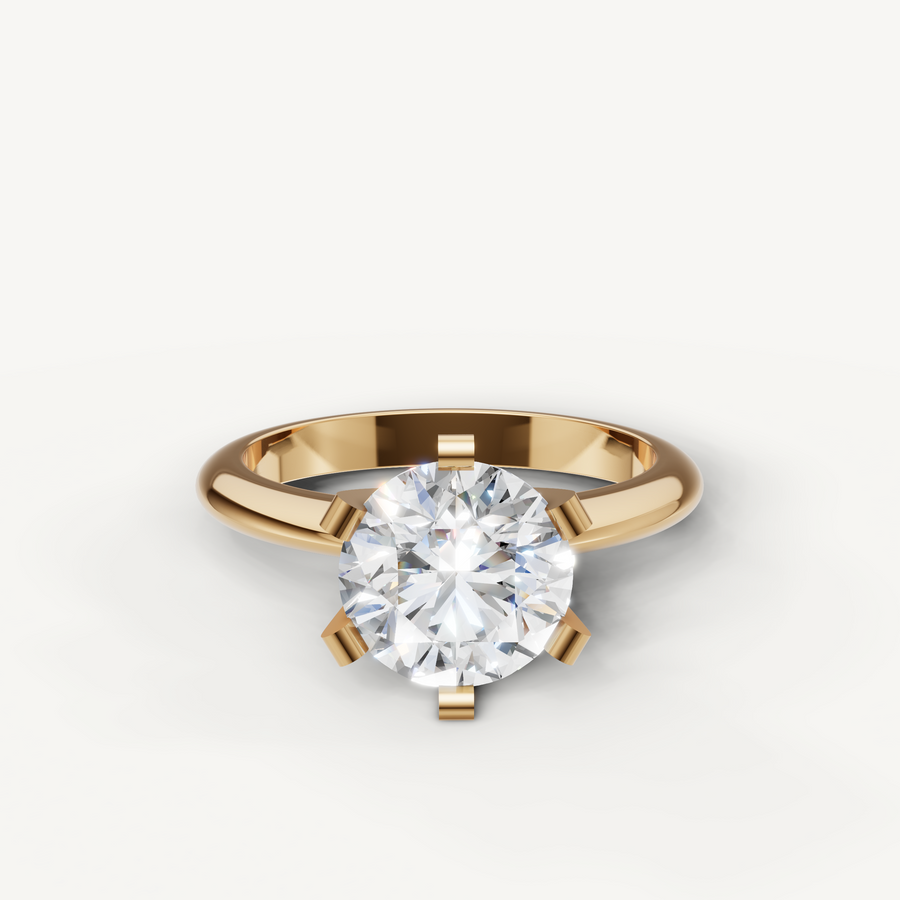
Solitaire engagement rings: choosing the shape, prongs and band
A practical guide to the solitaire engagement ring: how shape, prongs, setting height, band width, carat size and metal color change the way one center diamond looks on the hand.
Do lab-grown diamonds pass a diamond tester?
Lab-grown diamonds pass standard diamond testers because they are diamond. This guide explains how testers work, why moissanite and some HPHT stones can confuse them, and how to confirm a lab-grown diamond...
Engagement ring insurance: how it works and what to ask
A neutral, US-focused guide to engagement ring insurance: how homeowners sublimits, scheduled riders and standalone jewelry policies differ, what key terms mean, which documents to keep and which questions to ask.
Talk it through with our team.
A free 30-minute video or phone consultation, at your pace.